
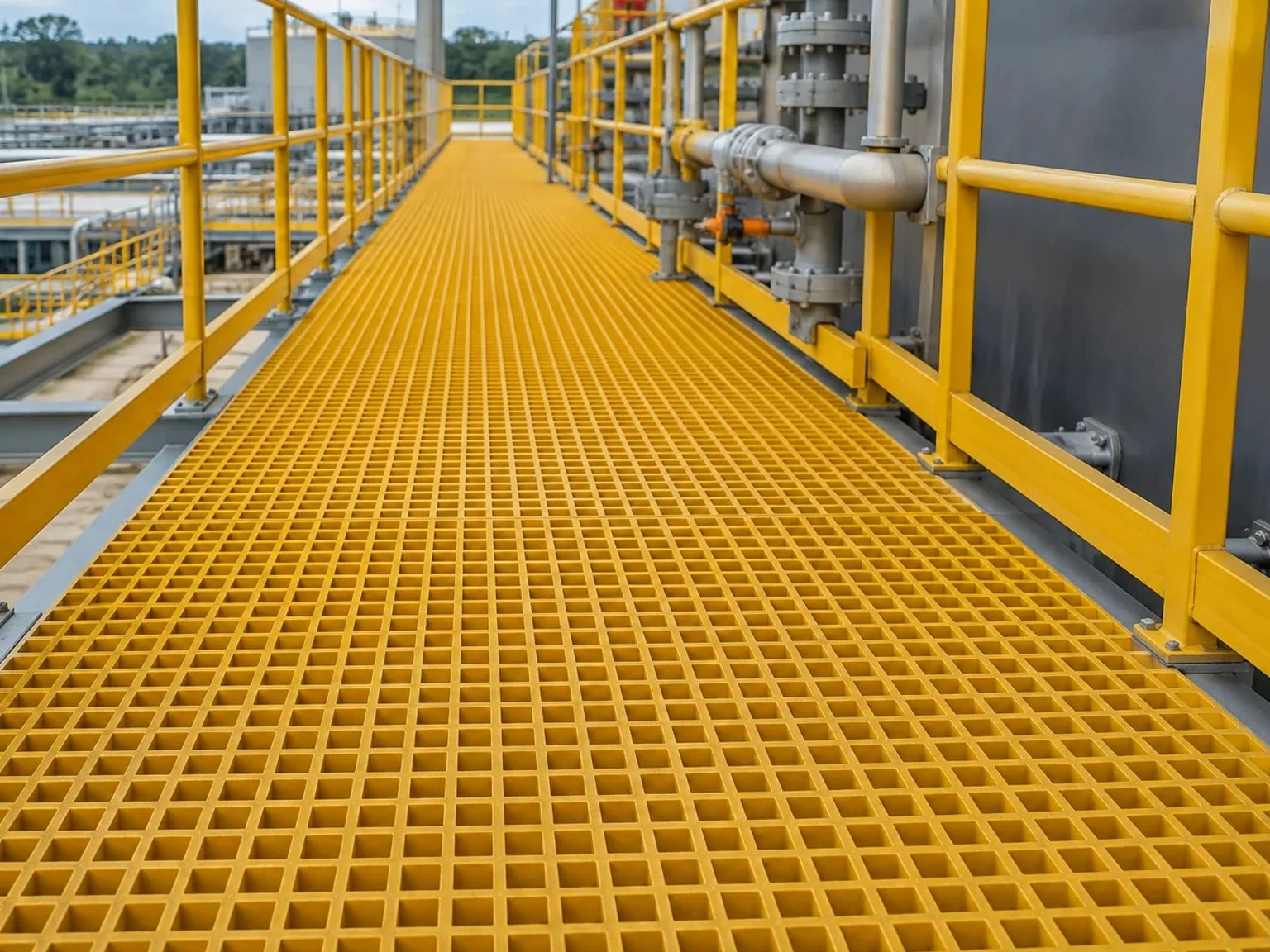
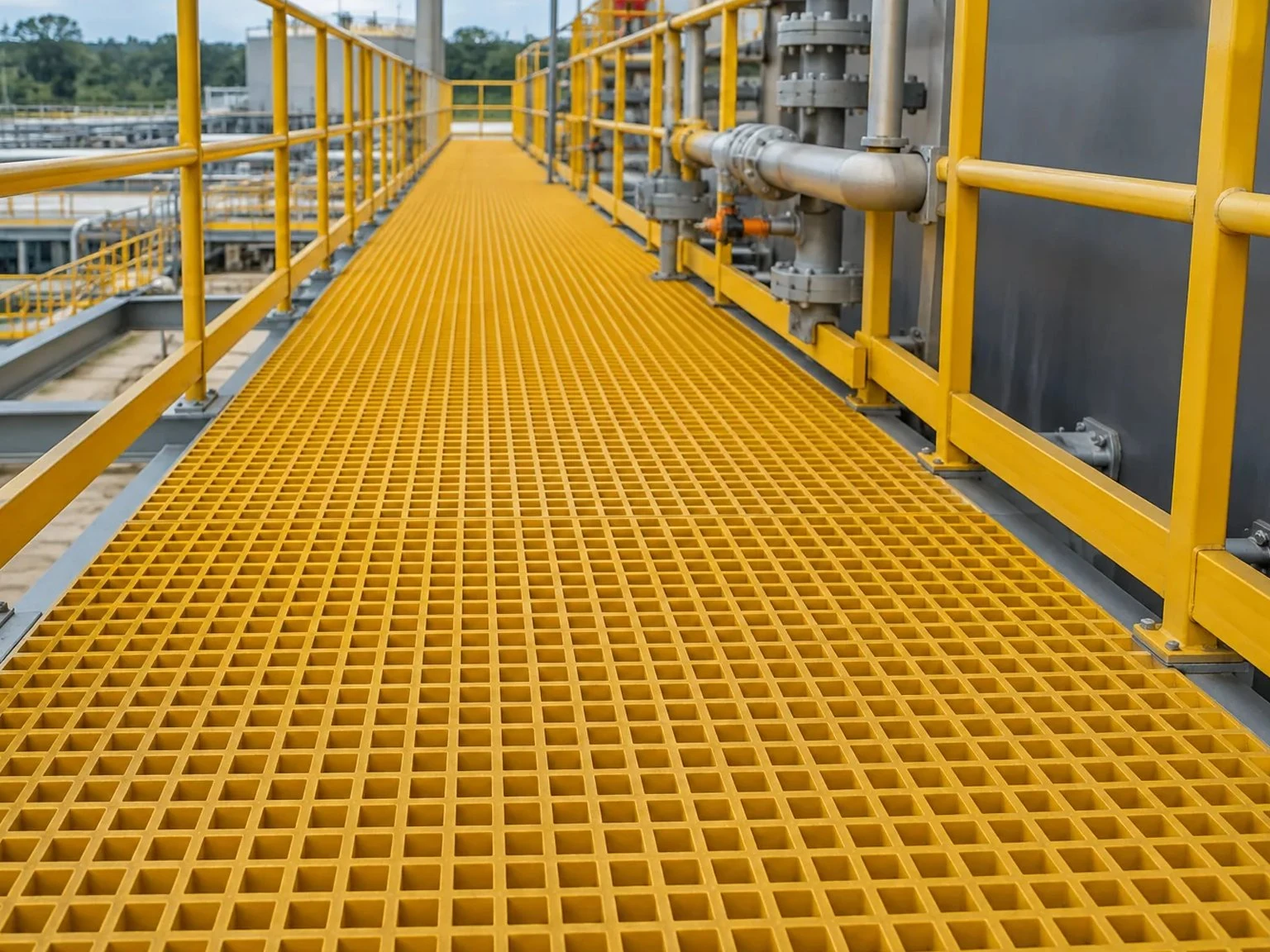
Quick answer: The case for frp grating explained rests on four practical advantages: resistance to corrosion, low weight for safe handling, no scrap value to deter theft, and stable electrical insulation. Those benefits explain why composites are replacing traditional materials across municipal and industrial projects.
What this guide covers
This guide explains everything you need to know about frp grating explained. Whether you are a municipal engineer, a civil contractor, a distributor or a facility manager, the right decision starts with understanding how the product is made, which standard it must meet, and where it will be installed. We have kept the discussion practical and grounded in real product specifications so you can apply it directly to your next project.
Across infrastructure projects, the cost of getting a specification wrong is rarely the price of the product itself. It is the rework, the delayed hand-over, the callbacks after the first heavy rain, and in the worst case a safety incident. Treat frp grating explained as a system decision rather than a line item, and the rest of the specification usually follows naturally.
Why the right specification matters
Selecting the correct configuration for frp grating explained affects safety, service life and total cost in equal measure. A cover or channel that is under-rated for the traffic it carries will crack or deform; one that is over-specified wastes budget and can create handling problems during installation. The goal is to match the product to the actual duty of the site.
Manufacturers express performance through a small set of reproducible parameters: material, load class, clear opening, frame dimensions and the standard against which the product is tested. Once you can read those parameters, most selection questions answer themselves. The tables and examples below use published figures from real product lines.
| Parameter | What it tells you | Typical range |
|---|---|---|
| Material | How the product resists corrosion, load and wear | SMC, BMC, FRP, polymer concrete, HDPE, ductile iron |
| Load class | Maximum test load under EN124 or AASHTO | A15 to F900 |
| Clear opening | Usable access or flow aperture | 250 mm to 1100 mm+ |
| Standard | The compliance framework | EN124 / EN1433 / AASHTO / ISO 9001 |
Understanding load classes
Load class is the single most important safety parameter. Under EN124, a class is defined by the test load the cover or grate must withstand and the area over which that load is applied. Choosing a class is about the traffic that will actually cross the product, not the maximum figure available in a catalogue.
| Class | Application area | Typical usage |
|---|---|---|
| A15 | Pedestrian and bicycle areas | Gardens, parks, patios, walkways |
| B125 | Sidewalks and light vehicle areas | Driveways, pedestrian zones |
| C250 | Road shoulders and kerbside channels | Service stations, parking edges |
| D400 | Roadways and heavy traffic areas | Main roads, highways, hard shoulders |
| E600 | Industrial zones, ports, airports | Docks, heavy industrial wheel loads |
| F900 | Aircraft pavements and extreme loads | Airport runways, dockyards |
A frequent mistake is to select by vehicle weight alone. Braking forces, wheel configuration and the dynamic amplification of a loaded truck matter just as much. When in doubt, move up one class at a kerbside or in an area subject to occasional overloaded vehicles.
Materials compared
Material choice drives almost every other property: weight, corrosion behaviour, electrical insulation, colour options and unit cost. Composite materials have become the default for many municipal and industrial projects precisely because they combine corrosion resistance with a low weight that is safe for manual handling.
| Material | Key characteristics |
|---|---|
| SMC composite | Sheet Molding Compound; light, corrosion-free, no scrap value, good insulation |
| BMC composite | Bulk Molding Compound; high strength, dimensionally stable, chemical resistant |
| FRP / fiberglass | Fiber-reinforced plastic; high strength-to-weight, corrosion resistant, low maintenance |
| Polymer concrete | Ultra-high compressive strength, zero water permeability, rapid shaping |
| HDPE | High-density polyethylene; chemical resistant, lightweight, impact resistant |
| Ductile iron | Very high load capacity, traditional, heavy, recyclable |
No single material is best for every site. Ductile iron still wins where extreme point loads and a familiar supply chain dominate, while composites win where corrosion, theft or manual-handling safety are the deciding factors. Polymer concrete and HDPE occupy the drainage-focused middle ground.
Real-world specifications
The following examples are drawn from published product data and show how the parameters discussed above come together in practice. They illustrate the range available; always confirm the exact drawing and test certificate for your specified model before ordering.
FRP GRP Heavy Duty Grate
Example — FRP GRP Heavy Duty Grate. Standard: EN124
FRP Drain Grating With Frame | Fiberglass Composite Gully Grating
Example — FRP Drain Grating With Frame | Fiberglass Composite Gully Grating. A purpose-built unit in this product family.
EN124 FRP Grating
Example — EN124 FRP Grating. Material: FRP Clear opening / size: 50×50 Standard: CE
How to select the right product
Work through the selection in a fixed order so that no constraint is missed. Start with the duty of the site, move to the regulatory framework, then narrow by material and dimensions, and finish with installation and lifecycle considerations.
- Confirm the traffic type and load class required at the exact location, including occasional abnormal loads.
- Identify the applicable standard (EN124, EN1433, AASHTO) and any project-specific approvals.
- Choose a material based on corrosion exposure, manual-handling policy and budget.
- Set the clear opening and frame dimensions to suit the access or flow requirement.
- Check locking, anti-slip and access features against site security and safety rules.
- Verify that the supplier can provide test certificates, drawings and consistent lead times.
Document each decision. A short selection record that captures why a class or material was chosen is invaluable at hand-over and during any later audit or insurance review.
Where this is used: Industrial platforms and flooring
This topic is most relevant to industrial platforms and flooring. Matching the product to the environment is what separates a specification that lasts from one that generates callbacks.
- Industrial platforms
- Walkways and access decks
- Chemical plants
- Offshore and marine environments
- Drainage trenches
Flooring environments favour a high strength-to-weight ratio, corrosion resistance, anti-slip surfaces and low maintenance. Confirm the exact load class, dimensions and standard against the conditions at your own site before ordering.
Installation best practice
Even a perfectly specified product will fail early if it is installed badly. The bedding, the surrounding concrete and the level of the finished surface determine how load is transferred into the ground and how the product behaves over thousands of traffic cycles.
- Excavate to the design level and compact the sub-base to the specified density.
- Seat the frame or channel on a firm, level bedding layer; never point-load the unit on loose ground.
- Set the finished top face flush with the surrounding pavement to avoid impact from wheels.
- Haunch or encase as required so the frame is fully supported along its perimeter.
- For composite units, use the prescribed lifting points and avoid dragging the cover across abrasive surfaces.
- Record the as-built level and take a photograph before the surface is closed.
Allow the surrounding concrete to reach its design strength before opening the area to traffic. Rushing this step is one of the most common causes of early rocking, noise and settlement.
Operation and maintenance
A simple inspection regime extends service life and prevents small defects from becoming expensive failures. Most manufacturers recommend a visual check after installation, a first inspection after the initial settling period, and then a scheduled annual review.
- Check that the cover or grate sits flat and does not rock under foot or wheel load.
- Look for cracks, spalling or deformation of the frame and surrounding surface.
- Clear silt and debris from channels and gully inlets so design flow is maintained.
- Confirm locking mechanisms operate and that anti-slip surfaces remain effective.
- In corrosive environments, inspect fixings and any exposed metal components.
Keep a maintenance log with dates, findings and actions. Trend data quickly reveals a location that is repeatedly damaged, which usually points to an underlying traffic or drainage problem rather than a defective product.
Frequently asked questions
What does the load class actually mean?
It is the test load, defined by a standard such as EN124, that the product must withstand. It is a performance classification, not simply a statement of how heavy the unit is.
Are composite products strong enough for roads?
Yes, when specified to the correct class. D400 units are designed for main roads and highways, and E600/F900 units serve industrial, port and airport environments.
How long do they last?
Service life depends on the environment and load cycle, but corrosion-resistant composites routinely outlast coated metal products in wet, coastal or chemical locations with far less maintenance.
Can I get a custom size or logo?
Yes. OEM and ODM capability covers custom dimensions, logos, patterns and colours. Confirm the drawing and any tooling requirements before placing the order.
Continue reading
- Electrical and Magnetic Properties of FRP Grating
- BMC Composite Material: What Makes It Different
- Installing FRP Grating: Clips, Supports and Safeguards
- SMC vs BMC Manhole Covers: Which Composite Is Right for Your Project



 English
 Español
 Русский
