

Channel Grates for Drainage: Types & Installation Tips
You’ve likely stared at that stubborn puddle at the bottom of your driveway after a heavy storm. While temporary puddles seem harmless, standing water near your walls is a quiet drainage emergency. According to home inspectors, ignoring this swampy mess routinely causes costly foundation damage. The best fix is a surface drainage channel.
Think of this drainage channel system as the mouth and throat of your yard. Unlike a square catch basin that simply drains a single low spot, channel grates for drainage act like ground-level rain gutters over long stretches. The top grate serves as the mouth, filtering leaves, while the hollow channel beneath acts as the throat, quickly “drinking” runoff to keep your property completely dry.
The Anatomy of a Drain: How the ‘Mouth and Throat’ Move Water
Every successful channel drainage system acts like a ground-level rain gutter, relying on three specific parts to protect your home from water damage:
- The Grate: The “mouth” that catches water while filtering out leaves.
- The Channel: The hidden drainage channel trench holding the gathered rain.
- The Outlet: The pipe connection aiming water away.
Think of the channel’s width as its “thirst factor.” A narrow drain is perfect for a flat patio, but catching heavy storm runoff requires a wider trench. This size dictates the drain’s flow rate capacity—exactly how much water it can quickly “drink” before puddling occurs.
Since water only flows downhill, precisely positioning your driveway channel drainage outlet at the trench’s lowest point is crucial. This lets gravity effortlessly pull the excess water away from your foundation.

Choosing Your Shield: Plastic vs. Metal vs. Polymer Concrete
Picking the right material for your drain isn’t just about matching your home’s exterior; it’s the key to avoiding that cheap, cracked plastic look in your driveway next spring. Your choice depends entirely on what your system will face daily—whether that’s splashing pool chemicals or the heavy tires of a family vehicle.
To build a system that lasts, you generally have three primary options to shield your trench:
- Plastic: A standard drainage channel plastic setup is lightweight, budget-friendly, and offers excellent chemical resistance against harsh pool chlorine.
- Galvanized Steel: Choosing a drainage channel galvanised with a protective zinc coating gives you reliable rust resistance and mid-range durability for outdoor patios.
- Cast Iron: When you need serious strength to handle passing cars, a heavy-duty drainage grate cast iron top is completely unmatched.
If you want a premium upgrade, consider the debate of polymer concrete vs plastic drainage channels. Polymer concrete blends natural sand and minerals with a tough epoxy resin, creating a freeze-proof, highly durable trench that withstands temperature swings far better than basic plastics.
Don’t Crack Under Pressure: Choosing the Right Load Class for Your SUV
Driving your SUV over a plastic lawn chair would be disastrous. That same crushing failure happens when you install the wrong driveway drainage grate. To prevent dangerous collapses, the industry uses load class ratings for surface drains. This system measures how well a cover handles and distributes heavy pressure into the surrounding ground. You don’t need expensive highway-grade covers for a backyard patio, but you must match the rating to your daily traffic.
Decoding these labels prevents safety hazards and keeps you from over-buying industrial materials. Here is your residential guide:
- Class A: Pedestrians and bicycles only.
- Class B: Passenger cars (ideal for a metal drainage grate for driveway installation).
- Class C: Delivery trucks and commercial vehicles.
From Pool Decks to Driveways: Finding the Perfect Fit for Your Property
With weight limits secure, you need to match the system to your yard’s specific zones. A bulky metal cover looks entirely out of place next to your flowerbeds. For walkways, a sleek, low-profile sidewalk drainage grate blends into the concrete smoothly without creating an ugly trip hazard.

Different outdoor areas require specialized covers to function properly:
- Pools: A plastic pool drainage channel resists harsh chlorine while staying comfortably cool on bare feet.
- Driveways: Heavy-duty cast iron or galvanized steel handles everyday vehicle traffic effortlessly.
- Patios: Look for heel-safe decorative grate options for your paver drainage channel so stilettos and small toes don’t get stuck during backyard parties.
Matching the channel grate to your home’s architecture proves you don’t have to sacrifice style to stop a flood.
The 5-Step Blueprint for a Successful Trench Drain Installation
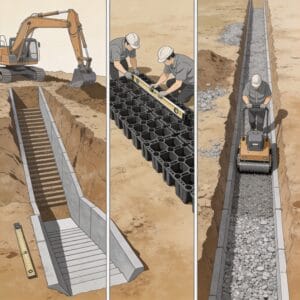
A reliable driveway trench drain installation guide prevents property washouts. Mastering how to install a yard trench system requires five key steps:
- Trenching
- Bedding
- Connecting
- Leveling
- Pouring
The golden rule here is the 1% slope—dropping the trench one inch for every eight feet of length so gravity pulls water away.

Simply burying tracks in loose dirt guarantees failure. Whether you are pouring a patio concrete slab drainage channel or a heavy-duty concrete driveway drainage channel, it requires a “concrete envelope.” You must pour wet cement entirely underneath and alongside the plastic base to cradle it. Without this heavy anchor, trapped air acts like a balloon, causing the hollow channel to “float” upward out of the wet mix.
Lastly, avoid the common DIY mistake of installing your grate perfectly flush with the ground. To actually capture surface runoff, the top must sit slightly lower than the surrounding pavement. Once your cement cures, your system will easily handle the rain.
Keep It Flowing: 3 Maintenance Habits to Prevent Costly Backups
Even a perfectly installed system will fail if a hidden clog chokes the outlet pipe. Winter road salt and grit quickly corrode any drainage grate cover, while fine dirt creates stubborn sediment buildup inside the channel. To protect your storm drain grate cover, follow this maintenance checklist:
- Leaf clearing: Remove fall debris before it rots and blocks water.
- Bolt tightening: Carefully unscrew security bolts without stripping them, then re-tighten snugly.
- Outlet flushing: Blast a garden hose into the exit pipe to wash away sediment.
Mastering the simple process of cleaning and maintaining linear drains guarantees your property stays dry year-round.
Your Dry Property Action Plan: Moving from Puddles to Permanent Solutions
You no longer have to dread a flooded garage. To confidently select your new drainage channel grate and essential storm water management system components, start with this 3-question kickoff:
- Where is the water?
- How heavy is the traffic?
- What is my budget?
Use those answers to build your shopping list based on material and load class, deciding if you’ll tackle a simple DIY install or hire a pro for concrete work. Taking control of your channel drainage transforms a soggy problem into lasting peace of mind during the heaviest storms.




 English
 Español
 Русский