
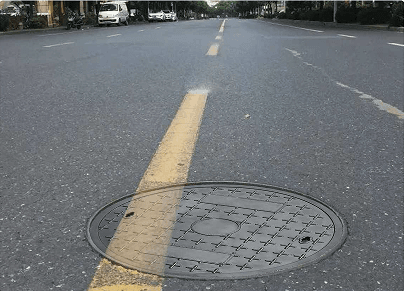
In 1957, an unexpected experiment during a nuclear test left scientists and historians alike baffled, and it all revolves around a seemingly mundane object: a manhole cover. This isn’t just any standard utility cover that you’d find in your neighborhood; it’s the nuclear manhole cover—a piece of metal that may have unintentionally become the fastest man-made object ever launched by humankind. But how did this ordinary item become part of a larger-than-life story that challenges our understanding of physics and history?
Imagine the scene: deep in the Nevada desert, amidst a backdrop of intense scientific curiosity and Cold War tensions, this unassuming metal cover became involved in an experiment aiming to measure the impact of a nuclear explosion. Little did the scientists know, their calculations would catapult the cover into legend—and possibly into outer space. Join us as we delve into the fascinating narrative surrounding this nuclear manhole cover, piecing together what really happened during that explosive moment and exploring the far-reaching implications of this peculiar event. Buckle up for a journey through time and science that promises to challenge what you thought you knew about a simple cover with a not-so-simple story.
The Nevada Desert Experiment: Setting the Stage
The Nevada Test Site, established in the early 1950s roughly 65 miles northwest of Las Vegas, served as Ground Zero for America’s burgeoning nuclear weapons program. By 1957, the Cold War had escalated tensions, driving military planners and scientists to innovate ever more elaborate methods of data collection. The purpose of the Nevada Desert Experiment was to quantify the blast’s ground shock, thermal flux, and radiation fallout in a controlled environment. Buried seismic gauges, pressure sensors, and high-speed cameras surrounded the detonation point, all designed to reveal how a nuclear detonation would affect structures, terrain, and living organisms.
Among the suite of instrumentation was an improvised device: a standard cast-iron manhole cover, repurposed with drilled holes to act as a makeshift gauge. Placed atop an angled steel tower that supported a thin, circular plate, the team intended to calculate force transmission through known mass. At the time, nobody foresaw that this rudimentary setup would result in the cover earning its unlikely nickname: the nuclear manhole cover. Yet this unremarkable piece of metal was now destined to make scientific history, illustrating both the ingenuity—and unforeseen pitfalls—of weapons-testing methodologies during one of humanity’s tensest eras.
The Unintended Launch: How the Manhole Cover Became a Projectile
When the device—nicknamed Sedan Crater because of its distinctive site design—detonated, the shock wave rippled outward in a fraction of a second. Temperatures soared to millions of degrees near the blast center, instantly vaporizing a column of earth and rock. The angled steel plate supporting the manhole cover acted like a springboard, converting the explosive force into kinetic energy. According to later calculations, the cover, weighing around 25 pounds, experienced acceleration orders of magnitude greater than conventional artillery shells.
Eyewitness accounts describe an instantaneous, deafening roar followed by a sheet of bright light. In that split second, the manhole cover was hurled skyward at speeds estimated to exceed 125,000 miles per hour—well beyond the escape velocity of Earth. This unintentional rocket test essentially turned the nuclear manhole cover into what some believe to be the fastest man-made object ever. The instant acceleration and velocity calculations stunned researchers, who had only sought to measure blast pressure. Instead, they had inadvertently launched a metal disc on a one-way journey, transforming a simple gauge into an enduring mystery of physics.
Tracking the Trajectory: Where Did the Cover End Up?
Immediately after the blast, range safety officers scoured instrumentation data, hoping to pinpoint the cover’s flight path. Radar installations and high-speed cameras captured fleeting blips and streaks, but none provided a clear recovery point. Estimates suggested the cover rose above 50 miles in altitude—potentially breaching the Kármán line and entering space.
Without any parachutes or tracking beacons, the object’s fate remains speculative. Some scientists hypothesize it melted or disintegrated under intense atmospheric friction during reentry, while others believe it found its way into deep desert terrain, buried beneath years of sediment. Regardless, the elusive journey of the nuclear manhole cover highlights both the triumphs and limitations of mid-century instrumentation, leaving behind more questions than definitive answers.
The Aftermath: Scientific Discoveries and Consequences
In the wake of the Sedan Crater test, data from the nuclear manhole cover’s acceleration forced a reevaluation of blast-force modeling. Engineers refined computational methods to account for secondary projectiles in future tests, understanding that even small masses could acquire lethal speeds under extreme pressures. The incident also drove improvements in materials testing, as scientists sought metals and alloys capable of withstanding the thermal and mechanical stresses unleashed by nuclear detonations.
Beyond physics, the event had policy implications. Skeptics of atmospheric testing pointed to the unpredictable nature of such experiments, arguing for underground alternatives to minimize environmental and geopolitical risks. Congressional hearings later that year discussed the necessity of tighter safety protocols. The manhole cover saga became a cautionary tale, symbolizing how novelty in weapons testing could precipitate uncontrolled hazards—both immediate and long-term—for personnel, ecology, and international relations.
Lessons Learned: Insights from the Unforeseen Experiment
The curious case of the nuclear manhole cover serves as a powerful reminder of science’s unpredictability. Even meticulously planned experiments can yield startling, unforeseen results. Researchers recognized the importance of thorough risk assessments, especially when repurposing everyday objects for high-energy testing.
Furthermore, this episode underscores the vital role of inter-disciplinary collaboration. Physicists, engineers, and safety officers worked together post-test to refine blast models, improve emergency procedures, and enhance telemetry. The legacy of the launch continues to inform modern aerospace and defense research, emphasizing humility in experimental design and respect for the forces we unleash. Ultimately, the story of one flying disk in the Nevada desert illustrates how curiosity, caution, and creativity must remain balanced in the quest for knowledge.
Conclusion: Reflecting on the Unforgettable Tale of the Nuclear Manhole Cover
The saga of the nuclear manhole cover stands as a testament to the unpredictable nature of high-energy physics. What began as a straightforward gauge became an unintentional record-setter, challenging our understanding of velocity, materials, and safety.
From the sun-baked Nevada desert to the pages of scientific lore, this humble disc reminds us that even the most mundane objects can launch extraordinary discoveries. As we reflect on this peculiar chapter in Cold War history, the lessons endure: plan meticulously, expect the unexpected, and never underestimate the power hidden in simplicity.




 English
 Español
 Русский