

Drain Channel and Grate Systems: Essential Guide
In the realm of civil engineering and architectural design, the implementation of effective drainage systems is crucial to maintaining structural integrity and preventing water-related damages. Among these systems, drain channels and grates hold paramount importance. They play a pivotal role in directing surface water away from areas vulnerable to flooding, erosion, and undue wear, ensuring that infrastructures remain safe and sustainable. This article delves into the nuances of drain channels and grates, analyzing their materials, applications, and the unique benefits they offer. By understanding the intricacies of these systems, professionals can make informed decisions that enhance both functionality and aesthetics.

Drain channels, also known as trench drains, are linear drainage systems designed to capture and convey surface water. These channels are typically installed in locations requiring efficient water removal, such as driveways, sidewalks, and pool decks. Their design is integral to preventing water accumulation that can cause damage or create hazardous conditions. The strategic placement and construction of drain channels are crucial to ensuring they effectively manage water flow and preserve the surrounding infrastructure.
Material Considerations in Drain Channels
The selection of materials for drainage channels is contingent upon the specific application and environmental conditions. Common materials include:
- Plastic Drainage Channel: Lightweight and resistant to corrosion, plastic channels are ideal for residential and light commercial applications. They offer ease of installation and are cost-effective, yet they may lack the robustness required for heavy-duty applications. Additionally, plastic channels are versatile in design, allowing for easy customization to fit various project needs while maintaining their cost-effectiveness.
- Concrete Drainage Channel: Renowned for its durability and load-bearing capacity, concrete is a preferred choice for high-traffic areas. Concrete channels can be pre-cast or constructed in situ, providing versatility in design and functionality. This material is particularly beneficial in environments subject to heavy loads or fluctuating temperatures, where longevity and resilience are essential.
- Metal Drainage Channel: These are typically constructed from galvanized steel or aluminum, providing a balance between strength and resistance to environmental factors. Metal channels are often employed in industrial settings where chemical resistance is paramount. Their robust nature makes them suitable for areas with high vehicular traffic, offering a durable solution without compromising on performance.
Specialized Drain Channels
- Brick Drainage Channel: Utilized in historical or aesthetically driven projects, brick channels offer a traditional look while maintaining functional efficacy. These channels are often chosen for restoration projects or areas where maintaining a classic aesthetic is important, blending seamlessly with older architecture while providing modern drainage capabilities.
- Half Pipe Drainage Channel: Often used in applications where a minimal profile is required, half pipe channels are effective in areas with limited space. Their low-profile design makes them an excellent choice for retrofitting existing areas or in locations where excavation depth is limited, providing efficient drainage without significant landscape alteration.
The Role of Grates in Drainage Systems

Grates serve as the protective surface covering drain channels, preventing debris from entering the drainage system while allowing water to pass through. The choice of grate is essential to ensure the system’s functionality and longevity. Grates not only serve a practical function but also contribute to the system’s overall safety and aesthetic. Selecting the right grate involves considering factors such as load requirements, material durability, and environmental exposure.
Material Selection for Grates
- Cast Iron Channel Drain Grate: Known for its strength and durability, cast iron is commonly used in high-load applications such as roadways and industrial sites. It is resistant to deformation under heavy weight. Cast iron grates also offer superior longevity in harsh conditions, making them an investment that pays off over time with reduced maintenance and replacement costs.
- Plastic Drainage Grate: Suitable for areas with pedestrian traffic, plastic grates are cost-effective and resistant to corrosion, though they may not withstand heavy loads. Their lightweight nature allows for easy installation and removal, which is advantageous for regular cleaning and maintenance in residential areas.
- Steel and Metal Grates: These grates offer a robust solution for heavy-duty applications, providing excellent load-bearing capabilities and resistance to environmental wear. They are often coated or treated to enhance their resistance to rust and corrosion, ensuring they remain functional and visually appealing even in demanding environments.
Grate Design and Application
- 4 Trench Drain Grate: This refers to a specific size of trench drain grate, typically employed in residential and light commercial applications. Its design allows for effective water capture and debris exclusion. The compact size of this grate makes it ideal for smaller drainage systems where space is limited, without compromising on the ability to manage water flow efficiently.
- 12” Wide Trench Drain Grate: Suitable for larger drainage systems, this size is often used in commercial and industrial applications where substantial water management is required. The wider design accommodates greater volumes of water, making it essential for areas prone to heavy rainfall or rapid water runoff.
- Channel Drain Grate Dallas TX: Regional variants like this may be adapted to local weather conditions, ensuring optimal performance in diverse environments. These grates are often customized to meet specific regional standards and climate challenges, providing tailored solutions that maximize drainage efficiency.
Installation and Maintenance of Drainage Systems

The efficacy of a drainage system is heavily reliant on proper installation and maintenance. Key considerations include:
Installation Techniques
- Driveway Channel Drainage Outlet: Installation requires precise grading and positioning to ensure that water flows efficiently into the drainage channel without pooling. Proper installation techniques are crucial to prevent backflow and ensure that the system directs water away from the structure effectively, preserving the integrity of paved surfaces.
- Concrete Slab Drainage Channel: These channels must be integrated seamlessly into concrete slabs, necessitating careful planning and execution to prevent structural weaknesses. Ensuring a correct fit and finish with the surrounding concrete is vital to avoid potential issues such as cracking or water seepage, which can undermine the entire drainage system.
Maintenance Practices
Regular maintenance of drainage channels and grates is imperative to prevent blockages and system failures. This includes:
- Routine Cleaning: Removing accumulated debris from grates to ensure unobstructed water flow. Regular cleaning schedules help maintain system efficiency and prevent the buildup of materials that could lead to blockages or overflow during heavy rain.
- Inspection for Damage: Regular checks for cracks or deformations in channels and grates to address potential issues before they escalate. Proactive inspections allow for timely repairs, extending the lifespan of the drainage system and preventing costly damage to surrounding infrastructure.
Innovative Applications of Drainage Channels and Grates
The utilization of drainage channels extends beyond traditional applications, with innovative uses enhancing both functionality and aesthetic appeal.
Decorative and Functional Integration
- Paver Drainage Channel: These are integrated into paved surfaces, providing discreet water management solutions that do not compromise the visual appeal of the area. By blending seamlessly with paving designs, these channels offer a hidden yet effective solution to managing water flow, preserving both the aesthetic and functional integrity of the space.
- Stone Drainage Channel: Used in landscaping, these channels blend seamlessly with natural surroundings, offering both drainage and aesthetic benefits. They are particularly effective in garden designs, where maintaining a natural look is paramount, while still providing essential drainage support.
Advanced Systems for Challenging Environments
- Heavy Duty Channel Drainage: Designed for environments subjected to extreme loads and harsh conditions, these systems incorporate reinforced materials and advanced engineering. These channels are essential in areas such as airports or shipping yards, where the infrastructure must withstand high traffic and environmental stress.
- Low Profile Drainage Channel: Ideal for areas with limited installation depth, these channels provide effective drainage without altering the existing landscape significantly. They are perfect for retrofit projects or urban areas where space and aesthetics are critical considerations, ensuring efficient water management without visible disruption.
Conclusion
The strategic implementation of drain channels and grates is an essential facet of modern construction and landscape design. By selecting appropriate materials and designs tailored to specific environmental conditions and application requirements, these systems ensure optimal water management and structural integrity. As urban landscapes continue to evolve, the importance of advanced drainage solutions remains paramount, safeguarding infrastructure and enhancing the sustainability of built environments. The ongoing development and innovation in drainage technology promise to meet future challenges, ensuring that drainage systems remain a crucial component in the design and planning of resilient cities.
Frequently Asked Questions (FAQ)
1. What is the difference between a drain channel and a trench drain?
The terms are often used interchangeably. Both refer to linear drainage systems designed to capture and convey surface water across a wide area (e.g., driveways, pool decks, sidewalks). A drain channel (or trench drain) consists of a long, narrow underground trough covered by a removable grate. Unlike point drains (standard floor drains), trench drains intercept “sheet flow” – broad layers of moving water – before it pools, making them ideal for preventing flooding and erosion.
2. What materials are available for drain channels, and which should I choose?
| Material | Load Capacity | Corrosion Resistance | Best For |
|---|---|---|---|
| Plastic (PVC / polymer) | Light to medium | Excellent | Residential driveways, walkways, light commercial (cost-effective, easy DIY installation) |
| Concrete (precast or cast-in-situ) | High to very high | Good | High-traffic areas, roads, industrial sites (durable, handles heavy loads) |
| Metal (galvanized steel / aluminum) | Medium to high | Moderate to good | Industrial settings, chemical exposure, heavy vehicular traffic |
| Brick | Low to medium | Moderate | Historical restoration, aesthetic-driven projects (blends with classic architecture) |
| Half pipe | Low to medium | Varies by material | Retrofit projects, shallow excavation sites (low-profile design) |
Match material to your load requirements and environmental exposure. For residential driveways, plastic or polymer channels are often sufficient. For roads or loading docks, concrete or metal is required.
3. What should I consider when selecting a grate for my drain channel?
| Factor | Why It Matters |
|---|---|
| Load rating | Must match traffic (Class A for pedestrian; Class B for cars; Class C/D for trucks) |
| Material | Cast iron (strongest), steel (heavy-duty), plastic (light-duty, corrosion-proof) |
| Slot size / open area | Wider slots handle heavy rain; narrower slots prevent debris entry and are heel-proof |
| Security | Locking grates or bolt-down designs prevent theft and accidental displacement |
| Regional adaptation | Some grates are designed for specific climates (e.g., heavy snow, frequent rain) |
For residential applications, a plastic or polymer grate with Class A or B rating is common. For industrial or roadway use, cast iron or heavy-duty steel grates with higher load classes are mandatory.
4. How do I properly install a driveway channel drain to prevent water pooling?
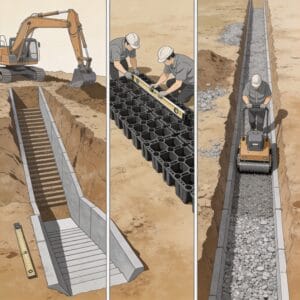
Proper installation requires precise grading and positioning. Follow these steps:
Excavate a trench – slightly wider and deeper than the channel
Create a stable base – compact gravel or pour a concrete bedding layer
Set the channel with correct slope – typically 1–2% (1/8 to 1/4 inch per foot) toward the outlet
Connect sections – interlocking joints or couplers; seal connections to prevent leaks
Backfill and compact – secure the channel in place
Install the grate – ensure it sits flush with the finished surface
Critical detail: The outlet must direct water to a safe discharge point (storm sewer, rain garden, or dry well) – never onto a neighbor’s property or public sidewalk without permit.
5. How do I maintain my drain channel and grate system to prevent clogs and failure?
Establish a quarterly maintenance routine:
| Task | Method |
|---|---|
| Clear debris from grate | Remove leaves, mulch, gravel, and sediment from the surface |
| Lift and inspect grate | Check for cracks, warping, or loose fasteners |
| Clean sediment basket (if present) | Empty removable catch buckets to prevent underground blockages |
| Flush the channel | Use a garden hose to wash accumulated silt toward the outlet |
| Inspect outlet pipe | Ensure water exits freely; clear any blockages |
For concrete or metal channels: Check for rust (metal) or spalling/cracking (concrete). Address minor damage early to avoid system failure.
6. What are the load classes for grates, and which one do I need for my project?
Grates are classified under standards such as EN 124 (European) or AASHTO (US). Common load classes:
| Class | Load Capacity | Typical Application |
|---|---|---|
| A 15 | 1.5 tonnes | Pedestrian areas, gardens, patios |
| B 125 | 12.5 tonnes | Sidewalks, car parks (passenger vehicles) |
| C 250 | 25 tonnes | Curb-side gutters, residential driveways |
| D 400 | 40 tonnes | Roadways, highways, roundabouts (standard for streets) |
| E 600 | 60 tonnes | Loading docks, industrial yards, airport aprons |
| F 900 | 90 tonnes | Airports, heavy-duty industrial ports |
For a standard residential driveway: Class B or C is sufficient. For roads or commercial loading areas: Class D, E, or F is required. Using an under-classed grate leads to cracking, deformation, or dangerous failure under vehicle weight. Always verify load ratings with the manufacturer before purchase.




 English
 Español
 Русский