
Manhole Cover Design: Safety and Engineering Marvel
You walk over them every day without a second thought, but that heavy metal disc beneath your feet is a masterpiece of design. According to civil engineers, a standard street sewer cover doesn’t merely block a dark hole; it actively keeps the surrounding road from collapsing under the intense weight of daily traffic.
What happens if a 20-ton garbage truck drives over a loose, square lid? Because a square’s diagonal is longer than its edges, a flipped square lid can plunge straight down, creating a devastating road hazard. As basic geometry dictates, a circle is the only shape that cannot fall through its own opening, making the round manhole cover an ingeniously simple safety feature.
Next time you wait at a red light, look down at the stamped iron letters before asking yourself, exactly what is a manhole cover protecting? Those 300-pound discs act as secure front doors to our invisible urban utility infrastructure, shielding a complex subterranean network of drinking water, natural gas, and high-voltage power lines from the chaos above.
Why Manhole Covers Are Round: The Geometry That Saves Lives
If a manhole cover were square, it could kill someone. It sounds like an exaggeration, but this hidden geometry is actually a crucial safety feature for our streets. When curious pedestrians ask the classic riddle—manhole cover round why—the answer begins with gravity.

A circle possesses a mathematical trait known as constant width. Because a manhole cover diameter is identical no matter which direction you measure it, the lid physically cannot drop through its own hole. If the grate were rectangular, tilting it diagonally would allow the heavy metal to slip right down the shaft, potentially crushing workers or creating a massive pit in the road.
Beyond preventing subterranean disasters, this curved edge solves practical problems above and below the asphalt. Workers can simply tilt and roll these heavy iron discs like giant coins instead of struggling to lift them. Down below, the cylindrical frame perfectly manages traffic load distribution, transferring the intense weight of passing vehicles evenly into the surrounding soil without buckling.
When tires rumble over a street lid, you are safely interacting with invisible physics. The geometric design is a brilliant piece of engineering hiding in plain sight, proving that simple shapes can solve complex urban safety challenges.
From Victorian Brick to Modern Iron: A Brief History of Street Access
Long before cars existed, ancient Romans protected their sewer trenches with massive stone slabs. When the Industrial Revolution hit, rapidly growing cities needed something mass-produced to hide their expanding subterranean networks. Foundries started pouring molten metal into sand molds, birthing the cast iron manhole cover. This heavy, reliable hardware finally allowed urban planners to pave smoothly over buried utilities without sacrificing easy access.
Those early lids were crafted from gray iron, behaving much like a heavy kitchen skillet. Gray iron holds its shape perfectly under steady pressure, but it can be surprisingly brittle if slammed by sudden force. As automobiles replaced horses, the intense impact of heavy traffic caused these older covers to crack. Engineers solved this pavement crisis by introducing the ductile iron manhole cover. By slightly tweaking the metal’s chemistry, they created a lid that microscopically flexes rather than snapping under a garbage truck’s tire.
Leaving this crucial street safety to chance was not an option for modern civil engineers. The industry established universal safety rules, known as ASTM standards, ensuring every newly cast lid meets strict stress requirements before hitting the pavement. This historical evolution of urban drainage hardware transformed crude iron plugs into heavily regulated engineering marvels. With perfected metallurgy, cities now use the surface of these modern discs as a highly detailed subterranean map.
Decoding the Street: What Those Grids, Holes, and Symbols Actually Mean
While walking across an intersection, notice the geometric textures stamped into the metal beneath your feet. Those raised waffles, diamonds, and concentric circles aren’t just decorative flourishes; they are precisely engineered slip-resistance patterns. Without these raised grids, a smooth iron disc would turn into a dangerous ice rink for tires and pedestrians every time it rained. Their very texture serves as a critical street safety feature.

Beyond keeping tires on the road, these iron lids serve as a coded map for city workers. Instead of digging blindly, crews rely on utility embossing—letters baked right into the metal—to know exactly what lies below. You can read the street like a professional by spotting these common abbreviations:
- S: Sanitary sewer cover (carrying household wastewater)
- D: Storm drain manhole cover (managing rainwater runoff)
- W: Water (clean municipal supply)
- T: Telecommunications (fiber optics and phone lines)
- E: Electric (power grids)
Opening a sewer access cover requires one final piece of visible engineering: the pick hole. Usually located near the outer edge, this small notch allows workers to insert a specialized steel hook and pry up a lid that easily weighs as much as two adult humans. Prying up that immense bulk reveals exactly why these underground doors demand such robust construction and specialized heavy-duty materials.
Heavy Duty Materials: Why Cast Iron Still Rules the Road
Every time a fully loaded garbage truck rumbles over a utility opening, that lid absorbs a massive, punishing impact. To keep the street from collapsing under these multi-ton vehicles, city engineers rely on traditional cast iron built to a strict standard known as H-20 or HS-20. This designation simply means the lid is a traffic rated manhole cover, engineered to support at least 40,000 pounds of axle weight without cracking or bowing under the pressure.
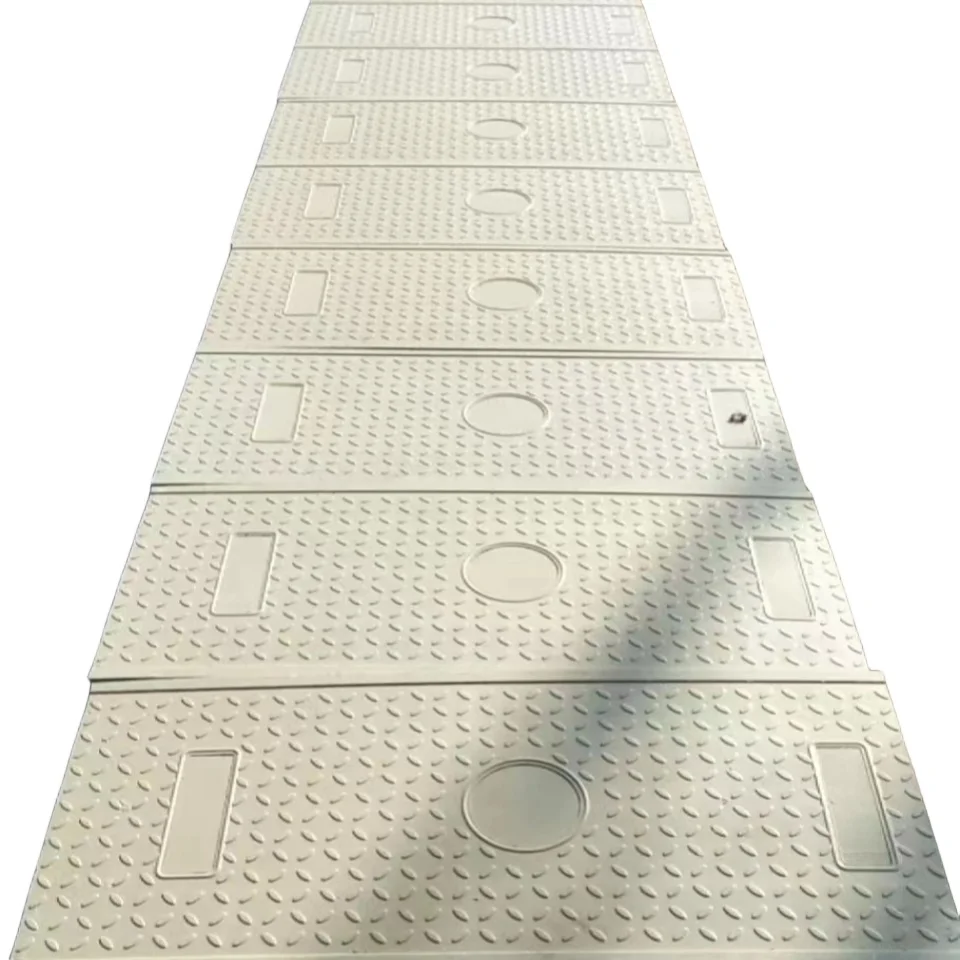
Traditional metal’s sheer weight and scrap value have created an unexpected modern crisis: thieves stealing iron discs for quick cash, leaving deadly open shafts in urban sidewalks. To combat this missing-lid epidemic, municipalities are increasingly swapping traditional iron for a high-tech composite manhole cover. These fiberglass-reinforced resin lids are incredibly durable, utterly worthless to scrap yards, and easily allow radio signals from underground smart meters to pass through to the surface without interference.
While city intersections demand heavy-duty engineering, residential environments operate under completely different safety requirements. If you inspect a backyard septic system, you will likely encounter a standard plastic manhole cover instead of heavy iron. A homeowner can safely step across a wide 36 inch plastic manhole cover hidden in their lawn, but dropping that same material into a busy street would spell disaster. Matching these materials to their specific environments ultimately requires diving into the physical dimensions and financial realities of everyday street maintenance.
The Business of Lids: Understanding Size, Weight, and Replacement Costs
Lifting a street lid is no simple job, and the physical reality is staggering. Across standard manhole cover sizes, a typical disc spans 24 inches with an immense mass that acts as gravity’s lock against the powerful vacuum created by passing truck tires. However, to protect sensitive underground electrical grids or deter scrap thieves from leaving open holes in the sidewalk, cities frequently bypass gravity altogether and upgrade to bolted locking covers.
Absolute precision is required when dropping a new cap into an old street. Because the heavy disc rests perfectly inside a buried metal ring, it relies on a machined edge called a seating flange to remain completely flush. If a utility crew installs a slightly mismatched replacement manhole cover, that tiny gap creates an annoying “clun-clunk” sound when driven over. Worse, an improper frame fit can cause a vehicle tire to dangerously flip the heavy iron disc through the air.
Financial realities turn these geometric safety puzzles into massive municipal expenses. When taxpayers ask exactly how much does a manhole cover cost, they are often shocked to learn a single lid and matching frame easily exceeds $1,000 before labor. Multiplying this across thousands of city intersections transforms these iron plates into massive municipal investments that ensure public safety.
The Next Time You Step on a Lid: Why This Humble Circle Matters
The quiet engineering happening beneath your feet represents a brilliant triumph of human-scale design. What once seemed like a mundane piece of metal is actually an elegant solution to a complex physics problem. By simply being round, that heavy iron disc prevents catastrophic accidents by never falling into its own opening.
These covers offer a key to reading the street. By decoding the secret language stamped into the iron—whether it marks water, gas, or a street sewer line—you can spot the clues connecting the visible world to the invisible infrastructure keeping your neighborhood alive.
Recognizing this infrastructure transforms a routine commute into an exploration of urban design. The heavy iron discs scattered across the pavement are incredible, deliberate engineering marvels hiding in plain sight.
Frequently Asked Questions (FAQ)
1. Why are manhole covers round?
The round shape is not arbitrary – it is a critical safety feature based on constant width geometry. A circle’s diameter is identical no matter how you measure it, meaning a round lid cannot fall through its own opening. In contrast, a square cover can be tilted diagonally (where the diagonal is longer than its sides) and slip down the shaft, potentially crushing workers or leaving a dangerous hole in the road. Additionally, round covers are easy to roll (workers can tilt and move them like giant coins) and the cylindrical frame evenly distributes traffic load into the surrounding soil.
2. What is the difference between gray iron and ductile iron manhole covers?
| Material | Properties | Failure Mode | Best For |
|---|---|---|---|
| Gray iron | Holds shape under steady pressure; brittle | Cracks or shatters under sudden impact (e.g., heavy truck strike) | Older installations, low-impact areas |
| Ductile iron | Microscopically flexes instead of snapping; impact-resistant | Bends; does not shatter | High-traffic roads, modern infrastructure |
Evolution: Early covers were gray iron (like a heavy kitchen skillet – strong but brittle). When automobiles replaced horses, the intense impact of heavy traffic caused gray iron to crack. Engineers tweaked the metal’s chemistry to create ductile iron, which flexes under garbage truck tires rather than shattering. Modern ductile iron must meet ASTM safety standards.
3. What do the symbols and letters stamped on manhole covers mean?
The raised letters (called utility embossing) are a coded map for city workers. Common abbreviations include:
| Marking | Meaning | Utility Below |
|---|---|---|
| S | Sanitary sewer | Household wastewater |
| D | Storm drain | Rainwater runoff |
| W | Water | Clean municipal supply |
| T | Telecom | Fiber optics, phone lines |
| E | Electric | Power grids |
Slip-resistance patterns (waffles, diamonds, concentric circles) are not decorative – they are engineered textures that prevent tires and pedestrians from slipping on wet iron.
4. What load rating do manhole covers need for different applications?
City engineers use standards like H-20 (HS-20) – meaning the lid must support at least 40,000 pounds of axle weight without cracking.
| Material | Load Rating | Application |
|---|---|---|
| Cast iron (traffic-rated) | H-20 / HS-20 | Public streets, highways (heavy truck traffic) |
| Composite (fiberglass-reinforced resin) | Varies (residential weight) | Low-traffic areas; also signals from underground smart meters can pass through |
| Plastic | Light-duty only | Residential septic systems, lawns (no heavy vehicles) |
| Locking / bolted covers | Additional security | Electrical grids, areas at risk for theft |
Theft problem: Cast iron has scrap value, leading to stolen covers and open street hazards. Composites are worthless to scrap yards and increasingly used in high-theft areas.
5. Why do some manhole covers shift or make clunking noises when driven over?
A proper fit relies on the seating flange – a machined edge where the lid rests inside a buried metal ring. Common causes of noise or shifting:
Mismatched replacement – Installing a lid with slightly different dimensions creates a gap
Worn frame – Years of traffic can deform the metal ring
Missing gaskets or seals – Some modern covers use rubber inserts to prevent rattling
Improper installation – Frame not level or not bedded correctly in concrete
Consequence of poor fit: A vehicle tire can flip a loose cover through the air, creating a dangerous projectile or leaving an open shaft.
6. How much does a manhole cover cost and why is it so expensive?
| Component | Typical Cost |
|---|---|
| Single lid + frame (cast iron) | 500–1,500+ |
| Heavy-duty H-20 rated cover | 800–2,000+ |
| Composite cover | 300–800 |
| Locking / bolted cover | Additional 100–500 |
Why so expensive:
Material – Cast iron requires significant raw material and energy to produce
Precision machining – The seating flange must be perfectly flat to prevent rocking
Load testing – Must meet ASTM safety standards
Weight – A standard 24-inch cover can weigh 100–300 pounds; shipping costs add up
Municipal reality: Multiplying these costs across thousands of intersections turns manhole covers into massive infrastructure investments. A single mismatched or loose cover can create decades of noise complaints and safety hazards.
Quick inspection checklist for pedestrians:
Look for utility embossing – Identifies what lies below (S, D, W, T, E)
Check for gaps or rocking – Loose covers are safety hazards (report to city)
Notice slip-resistance patterns – Waffles/diamonds prevent wet-iron slipping
Listen for clunking – Repeated noise indicates poor fit or worn frame
The humble round manhole cover is not mundane – it is a brilliant engineering solution to complex physics problems, hiding in plain sight beneath our feet.




 English
 Español
 Русский