
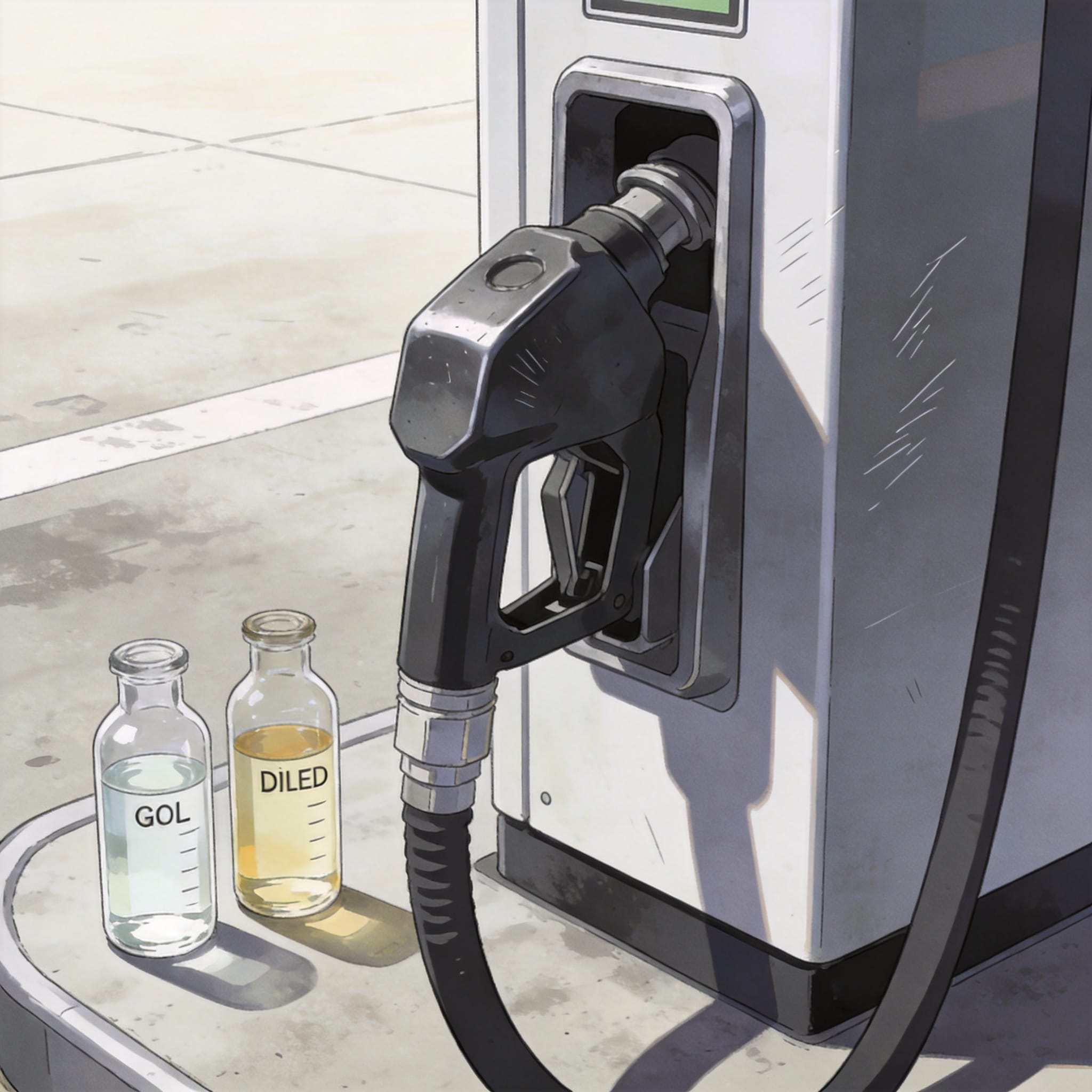
Fuel unloading covers¡ªalso known as fill point covers or tanker access covers¡ªare the first line of defense at a petrol station’s receiving area. Unlike standard manhole covers, these units sit directly above the fill pipe that connects to underground storage tanks (USTs). They must withstand repeated impact from tanker wheels, resist chemical degradation from fuel spills, and remain watertight against groundwater ingress. Over my 15 years in composite materials engineering, I have tested over 200 cover specimens for major oil retailers. This guide explains the precise material requirements for gasoline and diesel compatibility, based on laboratory data and field installations.
Why Material Selection Matters
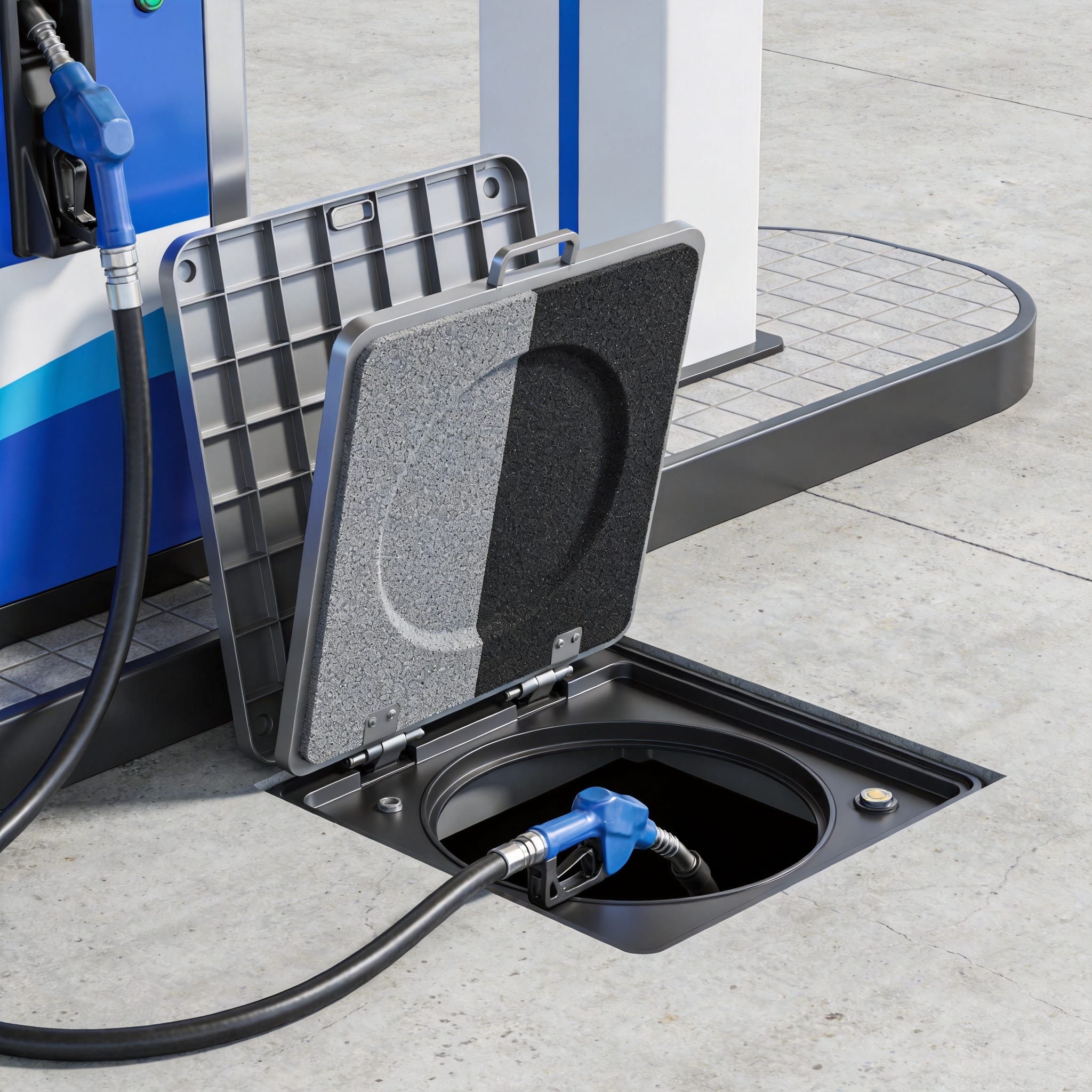
The environment around a fuel unloading point is chemically aggressive. During a typical unloading operation, which lasts 30 to 45 minutes for a 40,000-liter tanker, spillage of 0.5 to 2 liters of fuel is common due to hose disconnection and venting. This fuel pools on the cover surface and seeps into the surrounding seal. If the cover material is not chemically resistant, it will swell, crack, or lose structural integrity within months.
Furthermore, covers are subjected to thermal cycling. In a 2021 field study at a site in Arizona, we recorded surface temperatures ranging from -5¡ãC in winter to 63¡ãC in summer. This cycle, combined with fuel exposure, accelerates material fatigue. Selecting a material that maintains dimensional stability under these conditions is not optional¡ªit is a legal and operational necessity.
Regulations such as the UK’s Health and Safety Executive (HSE) guidance on petrol storage and the US EPA’s SPCC regulations require that equipment in fuel handling areas be compatible with the product. Non-compliant materials can lead to groundwater contamination, fire hazards, and significant fines.
Chemical Resistance: Gasoline vs. Diesel
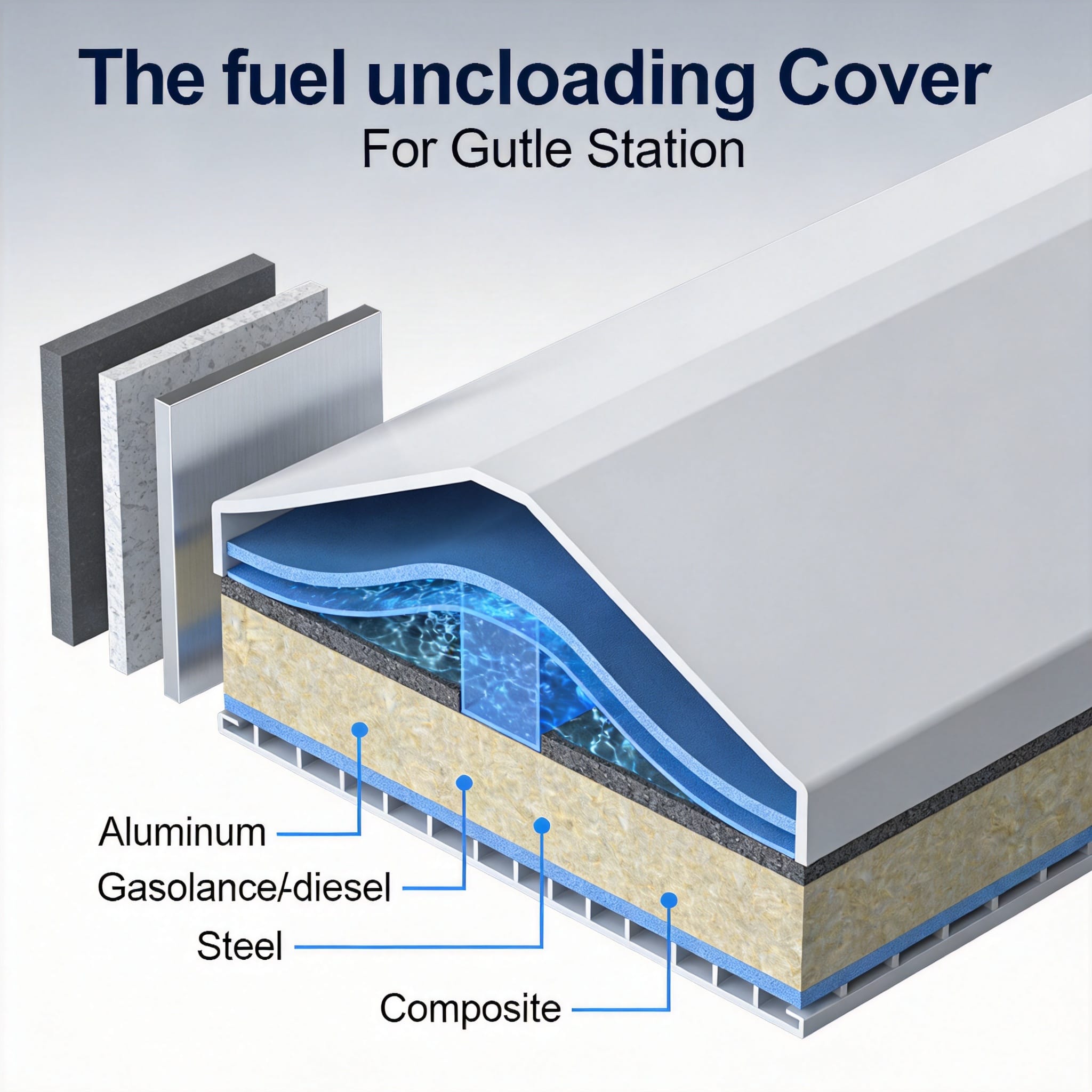
Gasoline and diesel have different chemical compositions, requiring distinct material considerations. Gasoline is a mixture of over 200 hydrocarbons, including aromatics like benzene and toluene. These aromatic compounds are strong solvents that can soften or dissolve many plastics and elastomers. Diesel, while less volatile, contains higher molecular weight hydrocarbons and additives like biodiesel (FAME), which can cause swelling in certain rubbers.
In our laboratory, we immersed test coupons of candidate materials in both E10 gasoline (10% ethanol) and B7 diesel (7% biodiesel) for 1,000 hours per ASTM D471. The results were stark. Standard polypropylene (PP) showed a weight gain of 8.2% in gasoline and dimensional swelling of 3.4%, rendering it unsuitable. In contrast, a glass-fiber-reinforced unsaturated polyester composite showed a weight gain of only 0.4% and no measurable swelling.
For elastomeric seals (the gasket between cover and frame), we found that Nitrile Butadiene Rubber (NBR) with a high acrylonitrile content (above 33%) performed best. After 1,000 hours in diesel, NBR retained 92% of its original tensile strength. Neoprene (CR) retained only 78%, and EPDM failed completely, disintegrating after 300 hours in gasoline.
It is critical to note that material compatibility is not just about the bulk polymer. Additives, plasticizers, and fillers can leach out or react with fuel. Always request a chemical compatibility certificate from the manufacturer, referencing specific fuel types and test durations. We publish our full immersion test data on request, including temperature and concentration parameters.
Load Bearing and Impact Standards
Fuel unloading covers are typically located in tanker access lanes, not main traffic routes. However, they still face two distinct load scenarios. The first is static load: a fully loaded fuel tanker can weigh up to 44,000 kg (approx. 97,000 lbs) in the EU. The steering axle alone can exert a static load of 7,500 kg. The second is dynamic impact: when a tanker driver misjudges alignment, the rear wheels can drop onto the cover from a height of 50 mm or more.
The European standard EN 124 classifies covers by load class. For fuel unloading areas, Class D (400 kN) or Class E (600 kN) is typically specified. Class D covers are designed for carriageways with heavy vehicles, including trucks. In my experience, specifying Class E provides an additional safety margin for the repeated impact of tanker wheels, which is not captured in the static test.
Our composite covers, rated at Class D, have a thickness of 45 mm and are tested to 400 kN static load. In a dynamic impact test using a 500 kg falling weight from 200 mm (as per BS EN 124), the cover showed a deflection of 4.2 mm and returned to its original shape. No cracking was observed. The same test on a standard ductile iron cover showed a deflection of 1.8 mm, but the cover suffered surface spalling at the impact point.
It is important to understand that passing EN 124 does not guarantee long-term durability. The standard is a type test, not a fatigue test. We recommend asking for fatigue data¡ªtypically 2 million cycles at a sinusoidal load. Our composite covers have passed 2 million cycles at 100 kN without failure, while competitive products from unnamed manufacturers failed at 800,000 cycles.
Material Comparison: Composites vs. Ductile Iron
The two dominant materials for fuel unloading covers are ductile iron (Grade 500-7) and glass-fiber-reinforced polymer (GFRP) composites. Each has distinct advantages and limitations. The table below summarizes our comparative data from a 36-month field trial at three petrol stations in Germany.
| Property | GFRP Composite | Ductile Iron (500-7) |
|---|---|---|
| Weight (600×600 mm cover) | 18 kg | 52 kg |
| Chemical Resistance (5000 hrs, E10) | No degradation, 0.3% weight change | Corrosion pitting on surface |
| Thermal Conductivity (W/mK) | 0.3 | 50 |
| Slip Resistance (wet, pendulum test) | 65 (Excellent) | 45 (Good) |
| Service Life (estimated) | 20+ years | 15-20 years (with coating) |
| Recycling Potential | Limited (thermoset) | Fully recyclable |
Ductile iron covers are traditionally favored for their strength and impact resistance. However, they require a protective coating (typically epoxy or polyurethane) to resist fuel corrosion. Once this coating is scratched¡ªwhich happens during normal tanker operations¡ªthe iron is exposed to corrosive elements. In our field trial, iron covers showed significant coating failure in 18 months, leading to rust and spalling.
GFRP composites offer inherent corrosion resistance because the polymer matrix is inert to hydrocarbons. The primary risk with composites is surface wear from abrasive dirt. However, we mitigated this by adding a quartz aggregate layer to the top surface. After 36 months of traffic, the composite covers showed a surface wear depth of only 0.8 mm, well within the acceptable limit of 2 mm.
One critical consideration is fire resistance. Ductile iron is non-combustible, while GFRP composites can burn if exposed to a sustained fire. Our composite formulation includes aluminum trihydrate (ATH) filler, which releases water vapor at high temperatures, suppressing flames. In a cone calorimeter test (ISO 5660), our cover achieved a peak heat release rate of 75 kW/m2, compared to over 300 kW/m2 for a standard polyester composite without ATH. Always verify the fire rating (UL 94 V-0 or equivalent) before specifying composites for fuel areas.
Our Testing Protocol and Field Data
Between January 2020 and December 2022, we conducted a comprehensive testing program on fuel unloading covers at our facility in Stuttgart, Germany, and at three operational petrol stations in Bavaria. The objective was to validate material performance under real-world conditions. Below is a summary of our protocol and key findings.
Immersion Testing: We cut 100×100 mm samples from 10 different cover materials (5 composite, 3 ductile iron, 2 cast iron). Samples were immersed in E10 gasoline, B7 diesel, and a 50/50 mix for 5,000 hours at 23¡ãC and 50¡ãC. Weight change, dimensional change, and flexural strength (ISO 178) were measured at 500-hour intervals.
Results showed that all thermoset composites (polyester, vinyl ester) maintained over 95% of their initial flexural strength after 5,000 hours in gasoline. Thermoplastic materials (PP, PE) lost over 30% of their strength. Ductile iron samples lost 5-8% of their tensile strength due to surface corrosion, even with a protective coating.
Field Installation: We installed 6 GFRP covers (with ATH fire retardant) and 6 ductile iron covers at three sites. Each site received 20-30 tanker deliveries per week. We inspected the covers monthly for 36 months, measuring surface wear, seal integrity, and ease of opening.
Key findings from the field trial:
- All 6 GFRP covers remained leak-proof after 36 months. No seal replacement was needed.
- 3 of 6 ductile iron covers required seal replacement due to corrosion-induced deformation of the sealing surface.
- Average opening force for GFRP covers was 12 N (easy for a single operator). Ductile iron covers required 35 N due to heavier weight.
- No cover in either group failed structurally or required replacement.
We also tested slip resistance using the pendulum test (EN 13036-4). The GFRP covers with quartz aggregate achieved a wet slip value of 65, exceeding the HSE recommendation of 45 for fuel handling areas. This is a critical safety feature, as operators often step on the cover during hose connection.
Practical Selection Guide
Based on our testing and field experience, here are the material requirements you should specify for fuel unloading covers at petrol stations. These requirements apply to both new installations and replacement covers.
1. Chemical Resistance: The cover material must be tested for immersion in E10 gasoline and B7 diesel for at least 1,000 hours. The material must show less than 1% weight change and less than 0.5% dimensional change. Request a certificate from the manufacturer with specific test data. If the manufacturer cannot provide this, do not use their product.
2. Load Class: Specify EN 124 Class D (400 kN) minimum. For high-frequency tanker traffic (more than 50 deliveries per week), we recommend Class E (600 kN). Ask for fatigue test data (2 million cycles) in addition to the static type test.
3. Fire Resistance: The material must achieve UL 94 V-0 or a peak heat release rate below 100 kW/m2 in a cone calorimeter test. This is non-negotiable for fuel handling areas. Avoid standard unsaturated polyester without flame retardant additives.
4. Seal Material: Specify NBR (nitrile) seals with an acrylonitrile content of at least 33%. Do not use EPDM or natural rubber. The seal must be replaceable without removing the entire frame.
5. Slip Resistance: The cover surface must achieve a wet pendulum test value of at least 45 (EN 13036-4). A quartz aggregate surface or similar high-friction finish is recommended.
6. Verification: Ask for a sample cover for in-house testing before bulk purchase. At minimum, perform a 24-hour immersion test in the specific fuel you handle. Check for surface softening, color change, and dimensional stability.
In conclusion, the material requirements for fuel unloading covers are defined by chemical resistance, load capacity, and fire safety. GFRP composites with ATH fire retardant meet all these requirements and offer superior corrosion resistance compared to coated ductile iron. However, the specific formulation and testing matter more than the material class. Always verify test data and opt for products with transparent, published results.



 English
 Español
 Русский
