

Beneath the hustle and bustle of urban life lies a world largely unseen but undeniably vital to our daily existence. It’s a subterranean network that keeps our cities functioning smoothly—manhole chambers. These silent sentinels serve not just as access points but also as gateways to the intricate labyrinth of tunnels and pipes that manage everything from sewage to telecommunications. But how much do we really know about these unsung heroes of urban infrastructure?
In this comprehensive guide, we embark on a journey to explore the hidden depths of manhole chambers, uncovering their secrets and demystifying their purpose. Whether you’re a curious city dweller who has walked over countless manhole covers or someone in the field of civil engineering, this exploration promises to enrich your understanding of what lies beneath. Prepare to delve into the fascinating world of manhole chambers, where every component plays a crucial role in the seamless operation of our cities.

Types of Manhole Chambers: A Closer Look at Varieties and Uses
Manhole chambers come in a diverse array of designs, each tailored to specific functional requirements. The most common variety is the standard maintenance chamber, typically circular or rectangular, providing straightforward access for inspection and routine cleaning of sewers or utilities. Inspection chambers, often shallower versions, are designed for quick checks and minor interventions, while deeper drop‐shaft chambers manage significant changes in elevation between pipes. Dumbbell chambers, characterized by two larger sections connected by a narrower throat, help reduce turbulence and prevent debris buildup. Specialized types such as multi‐entry chambers facilitate branching pipelines, and reinforced chambers withstand heavy road loads in high‐traffic areas.
Beyond form, each manhole chamber type serves distinct operational roles. For instance, drop‐shaft chambers protect downstream infrastructure by dissipating energy in high‐velocity flows, whereas multi‐entry chambers streamline junctions in complex utility networks. In coastal cities, watertight chambers guard against groundwater intrusion and saltwater corrosion. Stormwater chambers, often fabricated from precast concrete or polymer composites, manage runoff and relieve surface flooding. By selecting the right type of manhole chamber for a given environment—be it residential streets, industrial zones, or remote terrains—engineers optimize system performance, safety, and maintenance efficiency across the urban landscape.
Design and Construction Considerations for Manhole Chambers
Designing a durable manhole chamber requires careful evaluation of both environmental conditions and anticipated operational stresses. Site selection begins with analyzing soil stability, groundwater levels, and surrounding traffic loads. In heavy‐traffic corridors, chambers must meet stringent load‐bearing standards, often using reinforced concrete or high‐density polymer materials to resist deformation. For remote or corrosive environments, corrosion‐resistant composites such as fiberglass or HDPE (high‐density polyethylene) extend service life and reduce maintenance frequency.
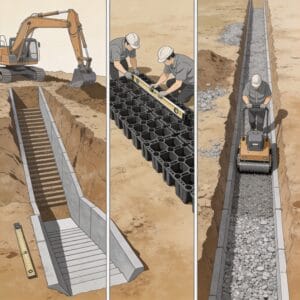
Construction sequencing typically involves excavation to the required depth, sub‐base preparation, and installation of a leveling pad—often a concrete base slab or compacted granular material. Precast riser sections are then stacked and sealed with watertight gaskets or grout to prevent infiltration. Internal benches and invert channels are formed to guide flow, while integrated steps or ladders ensure safe access. Waterproofing membranes or chemical coatings may be applied externally to safeguard against aggressive groundwater, and adequate ventilation or gas monitoring must be incorporated to protect maintenance personnel. Ultimately, a well‐designed manhole chamber balances structural integrity, ease of access, and long‐term durability under variable field conditions.
Components of a Manhole Chamber: Understanding the Essential Parts
The heart of any manhole chamber lies in its key components, each fulfilling vital roles for functionality and safety. At the top, the access cover and frame form the operator’s interface with the underground network. These covers, often made from cast iron or ductile iron, are rated by load class to match traffic conditions. Just below, riser sections determine the vertical profile, allowing the chamber to adjust to final road or ground level.
Inside the chamber, benching and invert channels create a smooth flow path, minimizing sediment accumulation and directing wastewater toward outfalls. Built‐in steps or ladders ensure safe entry and exit, while sealing rings and gaskets at pipe connections maintain hydraulic integrity. The base slab provides foundational support, distributing loads into the surrounding ground. Additional elements—such as ventilation grilles, gas monitoring probes, and safety handrails—enhance worker safety during inspections. Collectively, these components work in harmony within each manhole chamber to facilitate reliable access, efficient flow management, and structural stability beneath the urban surface.
Environmental Impact of Manhole Chambers: Sustainability and Conservation Efforts
Modern manhole chamber projects increasingly focus on sustainability and environmental stewardship. Material selection has shifted toward recycled or low‐carbon concrete mixes and polymer composites that reduce embodied energy. Precast manufacturing facilities often incorporate quality controls that minimize waste, while on‐site assembly reduces carbon emissions from heavy lifting and extended construction schedules.
Design innovations also mitigate ecological impacts. Infiltration‐enhancing chambers capture stormwater runoff, allowing recharge of aquifers and reducing flood risks. Green manhole covers with permeable surfaces filter debris and pollutants before they enter sewer systems. Lifecycle assessments guide engineers to adopt corrosion‐resistant materials that extend service intervals, cutting down on maintenance‐related disturbances and resource consumption. By integrating eco‐friendly features into manhole chamber design and installation, municipalities advance both functional resilience and long‐term environmental conservation goals.
Conclusion: Appreciating the Unsung Heroes Below Our Feet
Manhole chambers form the backbone of urban utility networks, discreet yet indispensable to everyday life. From varied chamber types and robust construction methods to carefully engineered components and sustainable practices, each aspect underscores the ingenuity behind this hidden infrastructure.
Next time you pass over a manhole cover, take a moment to recognize the complexity and engineering prowess at work beneath. These unheralded structures ensure our cities remain safe, efficient, and prepared for future challenges—true silent sentinels within the urban tapestry.




 English
 Español
 Русский