

Beneath our bustling city streets lies a hidden world crucial to the seamless operation of urban life. Among the elements that keep this world from unraveling, the humble manhole cover lid often goes unnoticed. Yet, its presence is vital, safeguarding both our infrastructure and our safety. Imagine walking through your neighborhood without these ubiquitous steel sentinels—an urban landscape full of gaping, hazardous voids. It’s a scene worthy of cautionary tales yet largely avoided thanks to these unassuming protectors.
The manhole cover lid is more than just a piece of metal; it is a guardian of complexity and chaos lurking below. From shielding the labyrinthine network of sewers, water lines, and electric cables to ensuring pedestrian safety, these covers play an indispensable role in urban safety. As we delve into the secrets behind their essential function, you’ll discover why each step you take on city sidewalks owes thanks not only to modern urban planning but also to these unsung heroes of urban safety.
Evolution of Manhole Covers: From Past to Present
The concept of covering street openings dates back to ancient civilizations, where stone slabs served as primitive manhole cover lids safeguarding drainage systems. In ancient Rome, engineers carved marble or stone discs to seal off access to sewers, balancing the need for durability with available materials. These early lids, while rudimentary by modern standards, demonstrated the essential principle: protecting the public from open voids and preventing debris from entering underground networks.
During the Middle Ages, Europe saw wooden planks used over pits and drains, though these were prone to rot and displacement. The Industrial Revolution ushered in a transformative era for manhole cover lid design. Cast iron became the material of choice, offering superior strength and longevity. Standardized casting techniques allowed municipalities to produce uniform covers, easing replacement and maintenance. Over the 20th century, advances in metallurgy led to ductile iron and steel variants, improving load-bearing capacity and resistance to environmental stressors.
In recent decades, the evolution has accelerated further with the introduction of composite materials and innovative locking mechanisms. Today’s manhole cover lids integrate ergonomic features for ease of handling, anti-slip surfaces for pedestrian safety, and tamper-resistant designs to deter theft. From stone to steel to high-tech composites, each stage of development underscores the enduring importance of these humble yet crucial urban guardians.
Materials Used in Manufacturing Manhole Cover Lids
Manufacturers select materials for manhole cover lids based on strength, durability, weight, and corrosion resistance. Traditional cast iron remains prevalent due to its exceptional load-bearing capacity and proven longevity. Ductile iron, a variation enriched with magnesium, offers enhanced tensile strength and flexibility, reducing the risk of brittle fracture under heavy traffic. Steel covers, often galvanized, deliver a balance of robustness and lighter weight, facilitating easier installation and maintenance.
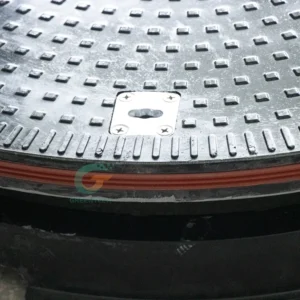
Composite materials, such as fiberglass-reinforced polymer or resin mixes, are gaining traction for their lightweight properties, corrosion resistance, and non-conductive nature—ideal for electrical or telecom access points. While composites may not match the raw compressive strength of iron, they excel in environments prone to chemical exposure or where manual handling by maintenance crews is frequent.
Concrete-reinforced lids, often sprinkled with anti-slip grit, serve low-traffic areas where cost-effectiveness outweighs heavy-load requirements. Surface treatments—epoxy coatings, polyurethane paints, and ceramic-based sprays—provide additional protection against moisture, salt, and wear. Today’s advanced manhole cover lids marry material science and engineering, ensuring each variant meets stringent safety and performance standards tailored to specific urban demands.
Maintenance Practices for Manhole Cover Lid Longevity
Routine inspection is the cornerstone of ensuring manhole cover lid integrity. City maintenance crews establish schedules to visually assess covers for cracks, corrosion, and proper seating within frames. Any signs of misalignment or looseness prompt immediate adjustment to prevent hazardous wobbling or accidental displacement under vehicle loads.
Cleaning practices involve removing debris, sediment, and corrosion buildup that can compromise lid fit and drainage efficiency. High-pressure water jets and pneumatic tools dislodge stuck dirt, while dewatering pumps clear standing water, reducing rust risk. Technicians apply rust-inhibitive primers and recoat covers periodically, prolonging service life in harsh weather and de-icing salt conditions.
Lubrication of locking mechanisms—particularly on anti-theft or hinged lids—ensures smooth operation and secures access closures. Maintenance logs capture each inspection’s results, tracking the performance history of individual lids. In larger municipalities, GIS-based asset management helps pinpoint aging or problem-prone locations, enabling predictive rather than reactive maintenance. Through these proactive practices, the lifespan of each manhole cover lid extends well beyond initial estimates, safeguarding urban infrastructure and public safety alike.
Innovative Technologies Enhancing Manhole Cover Lid Functionality
Smart manhole cover lids equipped with sensors are revolutionizing underground infrastructure monitoring. Embedded pressure and motion detectors alert authorities to unauthorized access, sudden shifts, or potential collapse risks. Wireless connectivity relays real-time data to central monitoring hubs, enabling swift responses to disturbances—be it a traffic accident dislodging a cover or a worker triggering an access event.
Advanced locking systems featuring RFID or biometric authentication prevent theft and unapproved entry. Some lids harvest kinetic energy from vehicular motion, powering low-energy electronics for lighting or data transmission. Others utilize self-heating elements to melt ice and snow, ensuring covers remain free of hazardous accumulation during winter months.
Acoustic sensors mounted within the lid frame detect blockages or abnormal flow patterns in sewer lines, facilitating targeted maintenance before small clogs escalate into costly backups. Integrated LED indicators signal maintenance crews to specific cover locations or issue alerts in low-visibility conditions. With each technological leap, the humble manhole cover lid evolves into a proactive sentinel, bolstering urban resilience and safety.
Future Trends in Manhole Cover Lid Development
The next frontier in manhole cover lid design lies in predictive maintenance powered by artificial intelligence. By analyzing continuous sensor data streams, machine-learning algorithms will anticipate component wear, corrosion onset, or alignment drift—triggering timely service calls before safety thresholds are breached. This shift from scheduled to condition-based maintenance promises significant cost savings and risk mitigation.
Material innovation continues apace with research into graphene-infused composites and self-healing polymers. These cutting-edge substances could yield covers that automatically seal micro-cracks, resist extreme loads, and dramatically outlast today’s models. Lightweight, high-strength materials will further ease handling burdens for maintenance crews, reducing injury risk and labor costs.
Integration into holistic smart city ecosystems will see manhole cover lids interfacing with traffic management, environmental monitoring, and emergency response systems. Imagine lids that detect floodwaters rising in storm drains, instantly rerouting traffic or alerting first responders. As urban centers grow more complex, the unassuming manhole cover lid will become a linchpin of interconnected safety and infrastructure networks.
Conclusion: Ensuring Urban Safety Through Manhole Cover Lid Innovation
From ancient stone slabs to smart, sensor-driven designs, the manhole cover lid has evolved into an indispensable element of urban safety and infrastructure resilience. Its journey reflects broader advancements in materials, technology, and maintenance philosophies that keep our cities running smoothly.
As future trends push boundaries in AI-driven monitoring and novel composites, these unassuming covers will continue safeguarding lives and systems beneath our feet, proving that even the simplest solutions can have the greatest impact.




 English
 Español
 Русский