

In the realm of extraordinary feats and mind-boggling achievements, there lies a tale so explosive that it defies conventional logic. Imagine an event where a seemingly mundane object, something as overlooked as a manhole cover, becomes the star of a record-breaking spectacle. Yes, you read that correctly—a manhole cover. Far from its usual function beneath our bustling city streets, this simple piece of metal transformed into a projectile of historic proportions. Curious? Prepare to be amazed as we delve into the captivating saga of the fastest manhole cover speed ever recorded.
This isn’t just a story about physics—it’s about sheer human curiosity and the relentless pursuit of understanding. During a Cold War-era nuclear test, an unexpected outcome propelled a manhole cover at speeds that left scientists and engineers astounded. While it might sound like something straight out of a science fiction novel, this astonishing event actually happened, sparking debates and discussions that continue to intrigue both experts and enthusiasts to this very day. Join us as we unravel the mystery, explore the science behind the phenomenon, and address the burning question: how on earth did a manhole cover achieve such unparalleled velocity?
The Cold War Era Nuclear Test: Setting the Stage
By the mid-1950s, the Cold War between the United States and the Soviet Union had escalated into an arms race like no other. Each superpower was determined to demonstrate its nuclear prowess, resulting in a series of tests designed to measure the destructive capacity of atomic weapons and study their effects on the environment, structures, and materials. It was within this tense atmosphere of experimentation and competition that Operation Plumbbob, conducted at the Nevada Test Site in 1957, came to life. Among the various shots in Plumbbob was the Pascal series, aimed at investigating underground cratering and blast dynamics.
Pascal-B, the most infamous test of that subset, involved placing a 300-kilogram steel plate—essentially a heavy manhole cover—over a borehole directly above a nuclear explosive. Researchers wanted to gauge how subterranean detonations behaved compared to surface bursts. The stage was set: lined instruments, shockwave gauges, and that unsuspecting manhole cover awaiting its fate. No one could have predicted that this routine part of the experiment would shatter preconceived notions of projectile launch velocities. Indeed, the stage was primed for an outcome so extraordinary that it would go down in history as a benchmark for the fastest manhole cover speed ever recorded.
The sheer scale of these tests, conducted in a remote desert valley, underscores the seriousness with which nuclear research was undertaken. Every detail—from the depth of the borehole to the orientation of measurement devices—was meticulously planned. And yet, despite this careful preparation, nature’s unpredictability took center stage. A clash between human design and the raw power of an atomic blast would soon yield data that defied both logic and laboratory expectations. As the countdown ended and the detonation occurred, scientists braced themselves for a powerful shockwave—but none could foresee the extraordinary flight path and velocity of that seemingly innocuous manhole cover.
The Unintended Consequence: Launching the Manhole Cover
When the nuclear device detonated in the Pascal-B test, its underground explosion generated an immense shockwave that raced upward through the borehole. Designed to crumple or disperse surface materials, the blast instead violently expelled the steel plate cover. In an instant, this ordinary piece of metal transformed from a stationary lid into a high-velocity projectile, rocketing skyward.
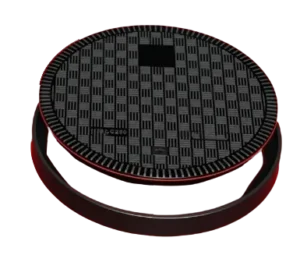
Telemetry devices registered readings far beyond their expected ranges, prompting disbelief among onlookers. Initial calculations suggested the plate had achieved a speed exceeding Mach 3—over three times the speed of sound. Such an event instantly claimed the title of the fastest manhole cover speed ever recorded, establishing a benchmark that remains unmatched. The sheer surprise of this unintended consequence not only captured headlines but also challenged engineers’ understanding of blast-induced projectile dynamics.
The manhole cover’s extraordinary launch trajectory highlighted the gap between theoretical design and real-world outcomes. Instrumentation, calibrated for more modest velocities, risked saturation or failure under such extreme conditions. Despite these challenges, the data that was captured painted a vivid picture: a hardened steel plate propelled by a nuclear shockwave could achieve velocities once thought impossible outside the realm of science fiction. In the days that followed, researchers would pour over every scrap of information, seeking to confirm, explain, and verify how a commonplace urban object had shattered speed records under such explosive circumstances.
Physics at Play: Understanding the Forces Involved
At the heart of the Pascal-B phenomenon lies the interplay of immense pressure differentials and rapid energy transfer. When a nuclear device detonates underground, it produces a shockwave traveling at thousands of meters per second. As it ascends the borehole, the shockwave compresses the air and rock columns above, creating a piston-like effect that channels force directly onto the manhole cover.
The resulting acceleration depends on the magnitude of the pressure front and the mass of the projectile. In this case, the steel cover—though heavy by street-furniture standards—was light enough relative to the shockwave’s energy to be violently expelled. The underlying physics involves complex interactions between shockwave propagation, material strength, and the geometry of the borehole, all combining to produce the fastest manhole cover speed ever documented.
The Aftermath: Analyzing the Impact
In the immediate aftermath of the Pascal-B detonation, scientists and engineers scrambled to interpret the anomalous data. Recorded velocities suggested that the manhole cover may have momentarily exceeded Mach 4—placing it among the fastest projectiles ever launched by human activity. Despite its extreme speed, no physical fragments of the cover were ever recovered, leading many to believe it disintegrated under aerodynamic heating or upon striking an unseen barrier at high altitude.
The disappearance of the cover added an air of mystery to an already astounding feat. Was it vaporized by the intense frictional forces encountered at such velocity? Did it smash into the desert floor miles away, burying itself beyond detection? These questions fueled both scholarly papers and public fascination, underscoring the profound impact that a simple test could have on scientific curiosity and the cultural imagination surrounding nuclear-era experiments.
Unraveling the Mystery: Possible Explanations
Over the decades, experts have proposed multiple explanations for how the Pascal-B manhole cover achieved its astonishing velocity. One theory suggests that the gauge measurements were skewed by instrument saturation, producing inflated speed estimates. Another hypothesis argues that the cover’s edge geometry acted like a sabot, minimizing air resistance and allowing the plate to accelerate more efficiently.
Computational fluid dynamics simulations have offered further insight, modeling how a thin, flat disc behaves when subjected to an accelerating shock front. These studies indicate that under ideal conditions—precise alignment, minimal drag, and peak overpressure—the plate could indeed reach velocities approaching or even exceeding those logged in 1957. Yet, until new experimental data or physical evidence emerges, the true mechanics behind the record-setting blast remain partly speculative.
Revisiting the Record: Challenges and Controversies
Despite its legendary status, the Pascal-B record for the fastest manhole cover speed has never been officially recognized by mainstream bodies like Guinness World Records. Skeptics have pointed to the lack of recovered debris and potential instrumentation errors as grounds for doubt. Others argue that such an unprecedented event warrants a formal reexamination using modern technology and more reliable sensors.
In recent years, a handful of researchers have called for renewed testing—this time with high-speed cameras, laser Doppler velocimetry, and multi-axis pressure transducers—to either confirm or debunk the original findings. Until such follow-up experiments are conducted, the Pascal-B manhole cover remains a paradox: at once a marvel of physics and a puzzle still resisting full explanation, forever enshrining the fastest manhole cover speed in the annals of Cold War lore.
Conclusion: Reflecting on the Astonishing Feat
The saga of Pascal-B and its airborne manhole cover stands as a testament to the unpredictable outcomes that can arise when human ingenuity meets raw natural forces. What began as a routine test of underground nuclear behavior ended with an object hurtling skyward at velocities once deemed impossible, etching the fastest manhole cover speed into scientific legend.
Though debates over instrumentation accuracy and physical evidence endure, the story continues to captivate engineers, historians, and enthusiasts alike. It reminds us that even the most mundane objects can attain extraordinary significance when thrust into the crucible of extreme circumstances.




 English
 Español
 Русский