
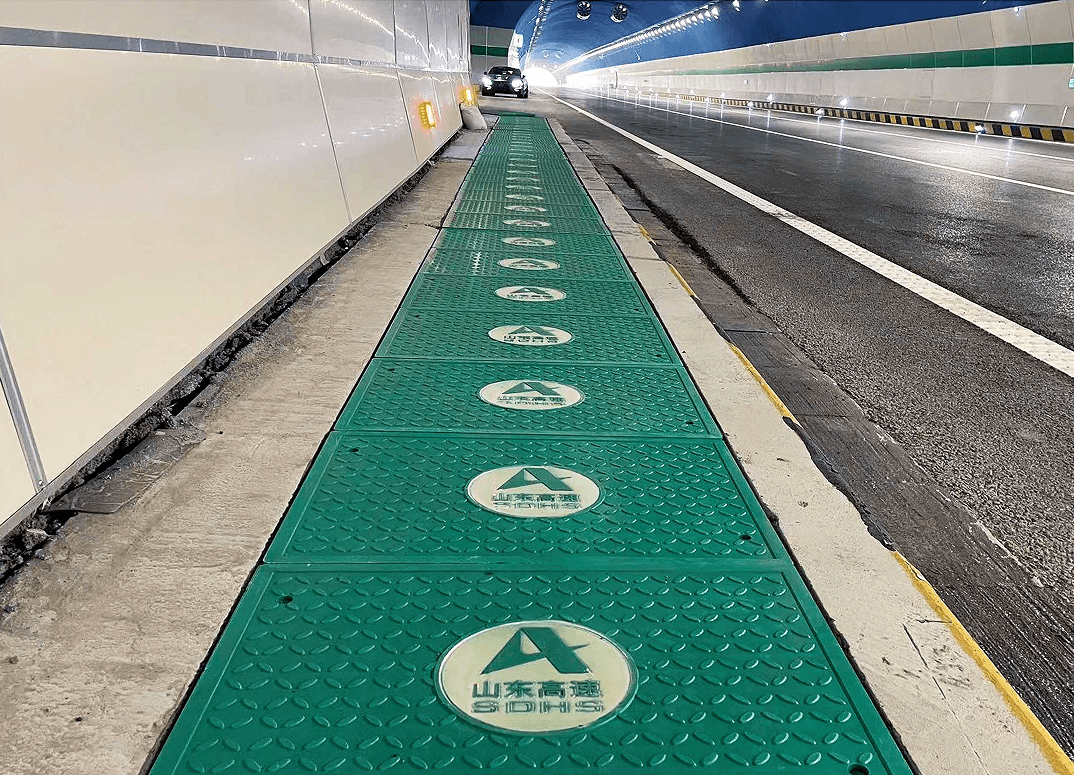
In the realm of astonishing stories that straddle the line between science and myth, the tale of a manhole cover launched into space stands out as one of the most intriguing. It might sound like an urban legend, but this story has its roots firmly planted in an actual event during the early days of the nuclear age. Decades ago, amidst the race for nuclear supremacy and the quest to understand the limits of explosive power, an experiment inadvertently sent a steel manhole cover hurtling skyward at unimaginable speeds.
This isn’t just a whimsical story from the archives of history; it’s a remarkable example of unintended consequences and the sheer force of human ingenuity. Although the manhole cover’s journey defies conventional logic, it serves as a testament to the unexpected outcomes in scientific exploration. So, how exactly did this seemingly ordinary piece of infrastructure get caught up in the extraordinary world of nuclear testing? As we delve into this captivating narrative, you’ll discover the intersection of science, chance, and the enduring human spirit of curiosity.
The Race for Nuclear Supremacy
In the aftermath of World War II, the United States and the Soviet Union found themselves locked in a fierce competition to develop more powerful nuclear weapons. Each superpower sought to demonstrate its technological prowess, not only as a deterrent but also as a symbol of geopolitical dominance. Throughout the 1950s, both nations conducted a series of above-ground nuclear tests, each more ambitious than the last. The Pacific Proving Grounds, the Nevada Test Site, and other remote locations became stages for spectacular detonations designed to measure blast yields, radiation propagation, and the effects on military hardware.
This strategic rivalry bred a climate of experimentation, inviting military engineers and physicists to push boundaries at every turn. Scientists devised novel setups to gauge the force of a nuclear blast, from armored vehicles positioned at ground zero to sophisticated instrumentation buried deep underground. Amid this frenzy of testing, safety protocols often lagged behind scientific curiosity, creating opportunities for dramatic—and sometimes accidental—discoveries. It was against this backdrop of heightened experimentation that the unusual manhole cover incident occurred, forever linking a commonplace piece of urban infrastructure with the quest for ultimate destructive power.
The Birth of the Manhole Cover Experiment
During Operation Plumbbob in 1957 at the Nevada Test Site, researchers designed a series of experiments to assess ground shock and crater formation. One particular test involved sealing a steel-covered shaft to simulate pressure containment. The idea was to use a heavy manhole-like cap to study how subterranean shock waves would behave when suddenly released by a nuclear blast, an innovative approach to understanding both weapon effects and potential civil defense applications.
To execute the experiment, engineers bolted a thick steel plate—resembling a manhole cover—over the vertical shaft of a test chamber. When the device was detonated, the blast rapidly built up pressure beneath this cover. Calculations predicted the plate would be propelled upward, but no one anticipated it might escape Earth’s atmosphere. Thus, what began as a controlled study within the race for knowledge transformed into the legendary account of a manhole cover launched into space.
Scientific Implications and Observations
Although the primary goal was to measure ground shock and chain reactions within geological layers, the experiment produced an unexpected bonus: data on high-velocity ejecta. Instruments placed around the test trench recorded anomalous readings of extreme acceleration—far beyond what conventional explosive tests had produced. This information offered a new window into the dynamics of impulse transmission and material resilience under hyper-velocity conditions.
Despite the high stakes, researchers seized the chance to analyze the steel plate’s flight path using radar tracking and high-speed photography. The resulting numbers stunned the scientific community: extrapolations suggested the plate could have reached velocities exceeding escape velocity—enough to break free from Earth’s gravitational pull. While official reports stopped short of confirming atmospheric exit, the experiment undeniably expanded understanding of shock-driven propulsion and provided benchmarks for computational models that would influence aerospace engineering for decades.
The Mystery of the Missing Manhole Cover
After the detonation, recovery teams scoured the surrounding area, anticipating to find fragments of the steel plate—and ideally, witness marks on its edges. Yet, despite extensive searches using ground crews, helicopters, and early sonar sweeps, no trace of the cover was ever located. Official debriefs labeled it “disintegrated” or “vaporized,” but anecdotal accounts suggested otherwise.
Eyewitnesses reported seeing a bright streak racing into the sky, and a few radar technicians claimed to have tracked an object ascending beyond the testing range. The absence of debris fueled speculation: did the plate shatter at extreme altitude, burn up during reentry, or simply vanish into orbit? To this day, the precise fate of that manhole cover remains one of the cold war’s enduring enigmas.
Legacy and Impact on Future Experiments
The fallout—both literal and figurative—of this curious experiment prompted a reevaluation of blast containment and safety measures. Armed forces and national laboratories recognized the need for stricter protocols when dealing with high-pressure, high-impulse setups. Subsequent underground tests incorporated reinforced hatches, remote monitoring systems, and computational simulations to prevent unintended launches of experimental hardware.
Beyond immediate policy changes, the data gleaned from the test influenced a generation of engineers designing railguns, light-gas guns, and other hypervelocity launchers. The conceptual leap from a nuclear-driven manhole cover to electromagnetic and pneumatic systems underscores how accidental discoveries can seed entirely new research fields. In many ways, that single plate’s spectacular departure laid conceptual groundwork for future propulsion experiments—proof that even mishaps can catalyze progress.
From Myth to Legend: The Manhole Cover’s Place in History
Over time, the story of the manhole cover launched into space became more myth than documented fact, morphing into a staple of Cold War folklore. It has been retold in popular science magazines, speculative fiction anthologies, and internet forums—often embellished with ever-wilder details. Yet its persistence speaks to a collective fascination with the intersections of raw power and human error.
Today, the incident enjoys a cult status among enthusiasts of military history and rocketry alike. Though no concrete evidence has ever surfaced to confirm the cover’s final resting place, the legend endures as a vivid illustration of science’s unpredictable outcomes. Whether you view it as cautionary tale or a testament to ingenuity, the manhole cover’s brief sojourn toward space remains a unique footnote in the chronicles of nuclear experimentation—and a reminder that even the most mundane objects can, under extraordinary circumstances, achieve extraordinary feats.
Conclusion
The improbable narrative of the manhole cover launched into space captures our imagination by blending hard science with the allure of legend. It reminds us that breakthroughs and blunders often travel hand in hand, forging new paths in unexpected ways.
As we reflect on this remarkable episode, we see how a simple piece of steel became entwined with humanity’s drive to explore—and sometimes to exceed—the limits of our world. In the end, it’s a story of curiosity, ingenuity, and the enduring capacity for surprise in scientific endeavor.





 English
 Español
 Русский