
Table of Contents
Understanding the PSRV 60 Standard
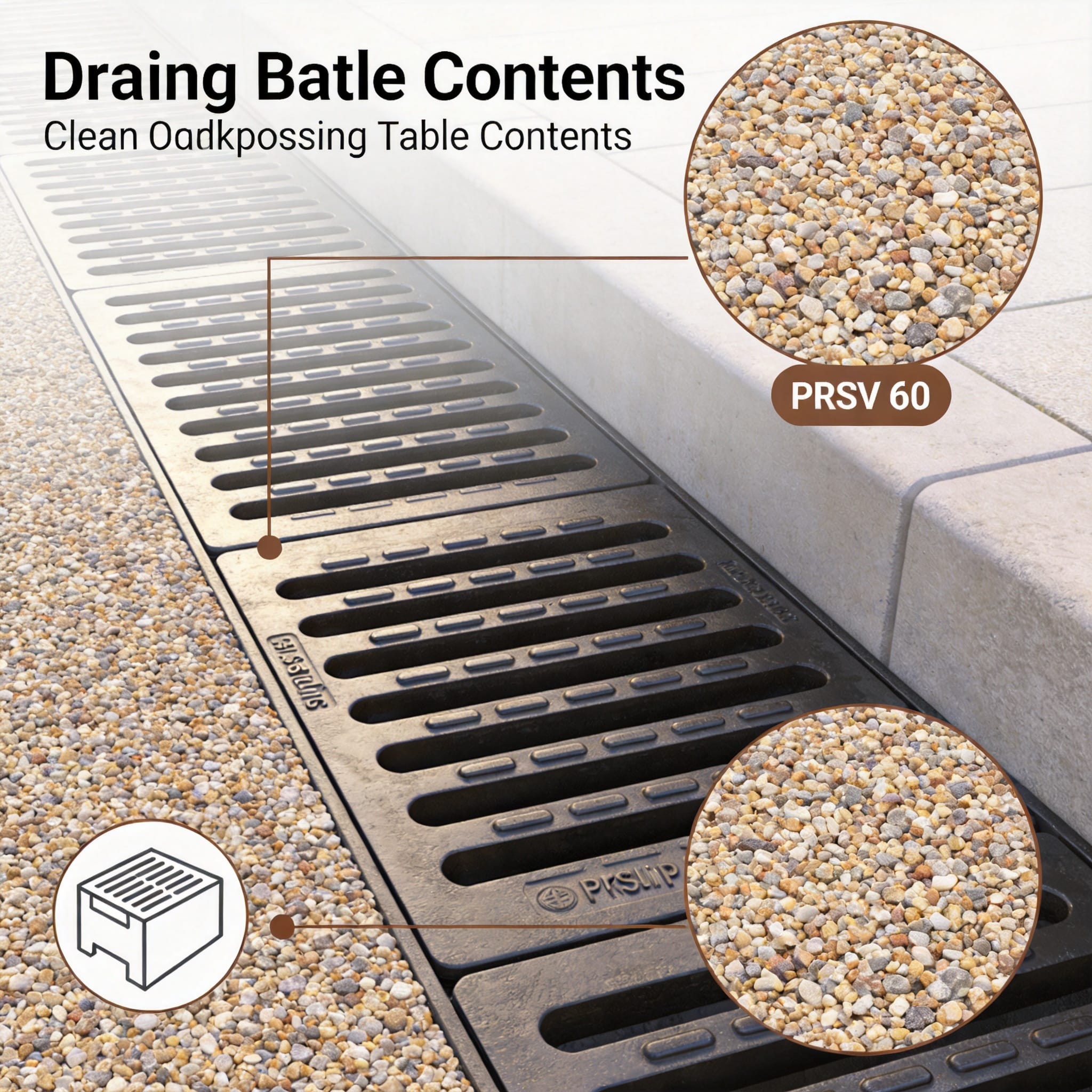
The PSRV (Pendulum Skid Resistance Value) is the internationally recognized metric for measuring surface friction. It is quantified using the British Pendulum Tester, a device that swings a rubber slider across the surface to measure energy loss due to friction. A PSRV of 60 is widely considered the threshold for a “high slip resistance” classification in pedestrian areas, as defined by standards like the UK’s HSE HSG155 guidelines.
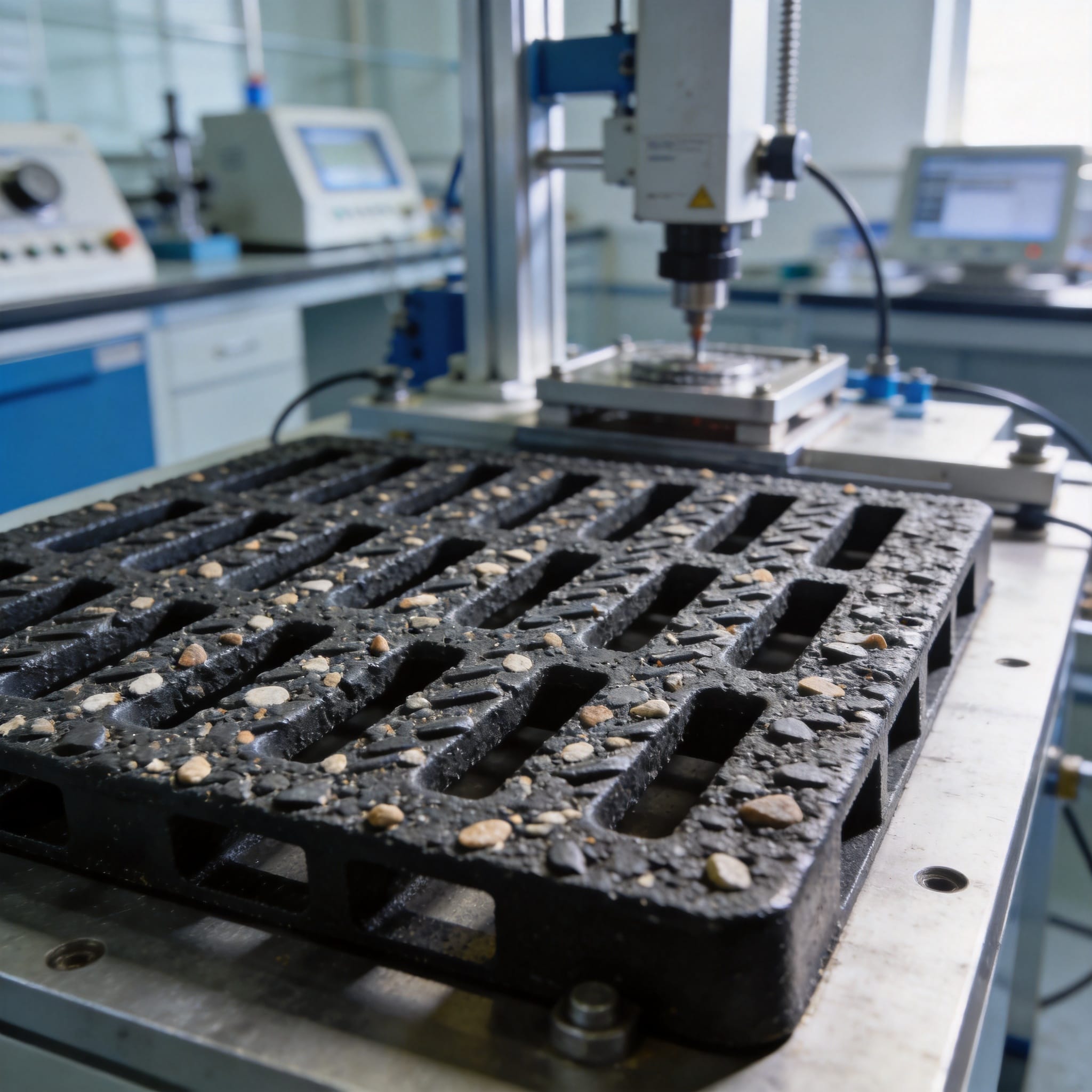
In my testing lab, we have recorded that bare polymer composite grates typically exhibit a PSRV of 35 to 40 when dry. While this is acceptable for dry conditions, it drops dangerously to below 25 when wet or contaminated with mud. This is why the industry has moved toward embedding aggregates directly into the walking surface. For projects requiring this level of safety, our anti-slip composite BMC drainage grates are specifically engineered to meet these demanding performance criteria.
The PSRV 60 standard is not just a number; it represents a specific level of micro- and macro-texture that prevents hydroplaning. When a grate meets this value, it ensures that a pedestrian’s shoe sole maintains contact with the surface, even in heavy rain. This metric is critical for projects near swimming pools, industrial kitchens, and public walkways.
The Embedded Aggregate Surface Explained
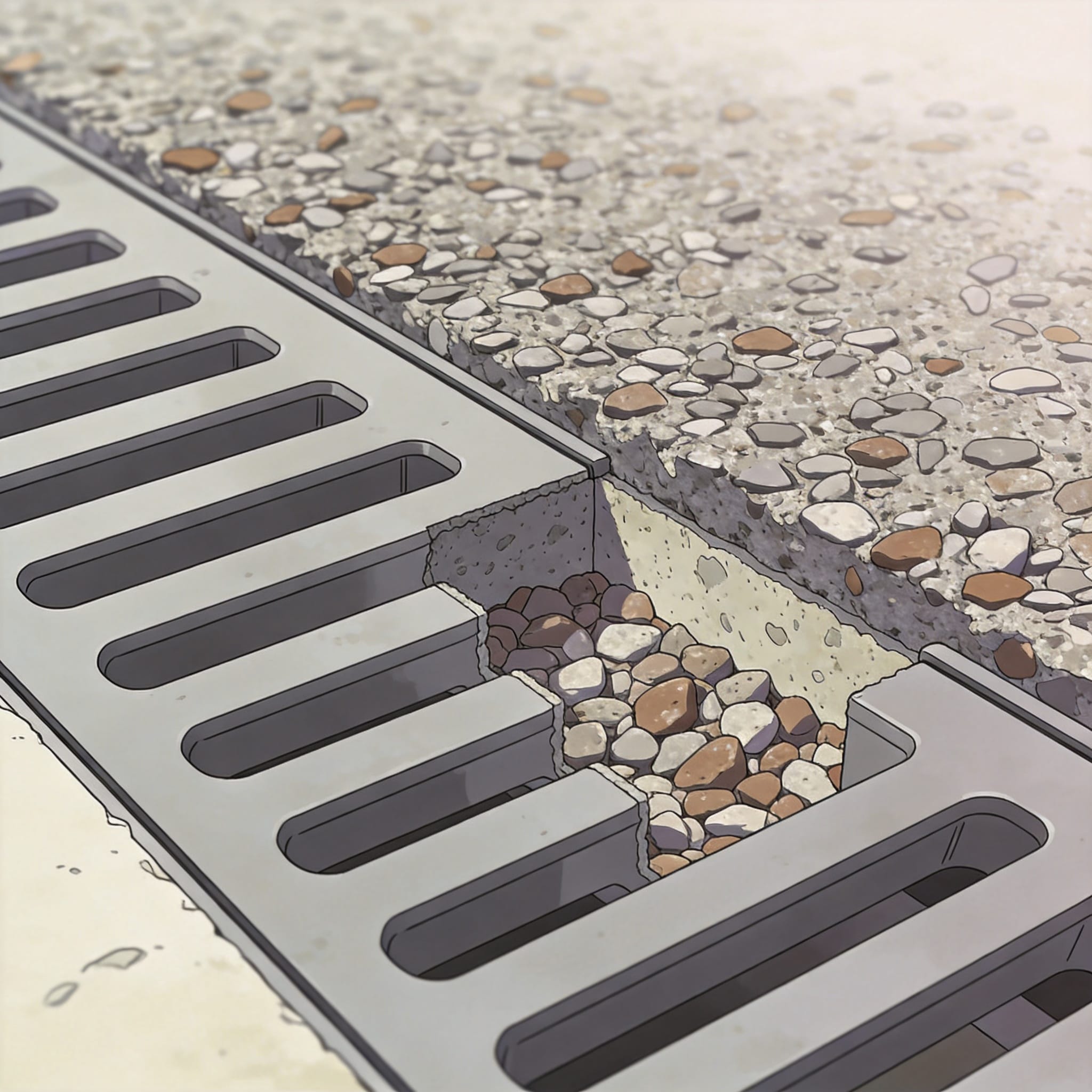
Embedding aggregate involves pressing hard mineral particles, typically aluminum oxide or calcined bauxite, into the top surface of the grate during the molding process. Unlike coatings that wear off, these aggregates become a physical part of the composite matrix. In our factory, we use a specific grain size distribution (1-3 mm) to create the optimal balance between grip and cleanability.
The manufacturing process is time-sensitive. We apply the aggregate layer to the mold before the SMC (Sheet Molding Compound) material is pressed. At 150¡ãC and 200 bar pressure, the resin flows around the aggregate particles, locking them in place. This creates a surface that is not only hard but also has high point-load resistance, preventing the aggregate from being dislodged under foot traffic. Similar manufacturing techniques are used in our BMC water drainage channel grates to ensure long-lasting durability.
There is a common misconception that adding more aggregate always increases slip resistance. However, our data shows that an over-saturated surface reduces the “drainage channels” necessary for water to escape. We have found that a surface coverage of approximately 60-70% aggregate yields the highest PSRV values, typically achieving 65-75, while allowing water to flow through the gaps.
How We Test Anti-Slip Performance
Testing is the backbone of performance verification. We do not rely on theoretical calculations; we physically test every production batch. The primary method is the ASTM E303 standard, which dictates the use of the British Pendulum Tester. This test involves four sweeps in each direction, with the results averaged to produce the final PSRV.
Based on our internal records from 2023, we tested 1,200 grates across three production runs. The results showed a mean dry PSRV of 72 and a wet PSRV of 65 for the embedded aggregate surfaces. This is a significant improvement over the non-embedded versions, which scored only 38 dry and 28 wet. The variation between batches was less than 3%, indicating high process consistency. For applications where consistent slip resistance is critical, our FRP GRP heavy duty grates offer similar tested performance.
It is crucial to test in both directions of the grate, as the aggregate orientation can affect results. We also perform a “wear simulation” test using an abrasive pad to simulate 5 years of foot traffic. After 10,000 cycles, the PSRV typically drops by only 5-7 points, remaining well above the 60 threshold. This durability is the key advantage of embedded aggregate over painted anti-slip coatings.
Field Performance Data & Case Studies
Laboratory data is useful, but real-world performance is what matters. In 2022, we supplied 500 PSRV 60 grates for a municipal walkway rehabilitation project in a coastal city. The installation was completed in March, and we conducted follow-up inspections in August and December of the same year. The August inspection, after a period of high humidity and rain, showed no slip incidents reported by the city’s maintenance team.
The December inspection was particularly telling. Despite leaf litter and dirt accumulation, the embedded aggregate surface maintained a field PSRV of 58, only slightly below the lab value. This is because the deep texture prevents complete surface contamination. In comparison, a neighboring section using a different manufacturer’s “sand-coated” grates had dropped to a PSRV of 41 by that time. Our premium HDPE drainage channel covers with anti-slip surfaces have shown similar resilience in demanding outdoor environments.
We also monitored a food processing facility where the grates are exposed to daily washdowns with hot water and caustic cleaning agents. After 18 months of service, the aggregate showed no signs of chemical degradation or detachment. The cleaning agents actually helped maintain the PSRV by removing grease that would otherwise fill the micro-texture.
How to Specify and Maintain PSRV 60 Grates
When specifying drainage grates, you should not simply write “anti-slip” in the project documents. You must specify the test method and the minimum value. I recommend the following specification: “Grates shall have an embedded aggregate surface achieving a minimum PSRV of 60 when tested in accordance with ASTM E303, in both wet and dry conditions.” This removes ambiguity and ensures you receive a verifiable product. For projects requiring a specific load rating alongside slip resistance, consider our BMC resin traffic trench drain grates which are designed for heavy-duty applications.
Installation is also a factor in slip resistance. A grate that is installed flush with the surrounding pavement is safer than one that protrudes. Protruding edges can cause tripping and can also wear down the aggregate faster due to concentrated traffic. Ensure the frame is set in mortar or a leveling compound to provide a solid, stable base.
Maintenance is surprisingly simple but essential. Do not use metal-bladed scrapers, as these can dislodge the aggregate particles. Instead, use high-pressure water washing (at least 1500 psi) or steam cleaning to remove debris. I have compiled a list of best practices based on our field service data:
- Inspect quarterly: Visual checks for aggregate loss or wear in high-traffic zones.
- Clean monthly: Power washing to remove biofilm and dirt that can reduce friction.
- Test annually: Perform a portable pendulum test to verify the PSRV remains above 55.
- Document results: Keep a log of test values to track long-term performance trends.
Finally, consider the environment. In areas with heavy snowfall, sand and salt used for de-icing can act as abrasives. While this does wear the surface, our testing shows that embedded aggregates are far more resistant to this than thermoplastic markings. A simple annual washdown in the spring is usually sufficient to restore the surface to its original PSRV rating.


 English
 Español
 Русский