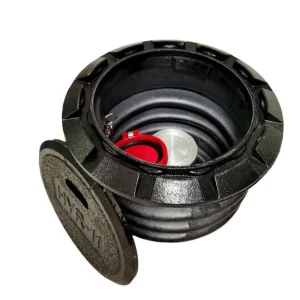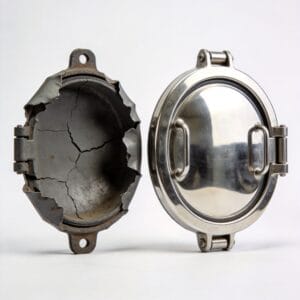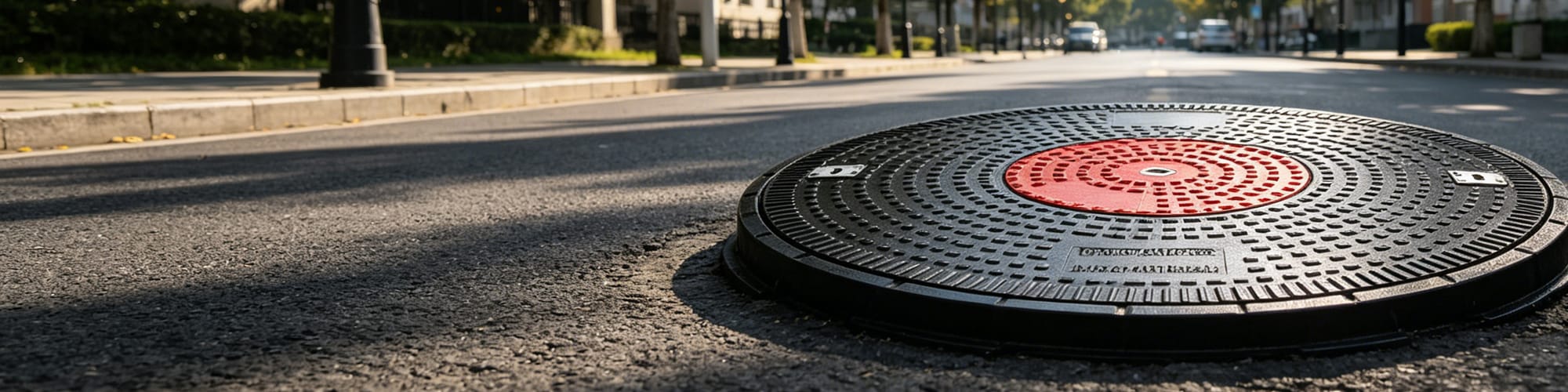
On a seemingly ordinary day in 1957, a routine underground nuclear test in the Nevada desert inadvertently launched an object into the annals of speed history. Picture this: a solid steel manhole cover, meant to seal a test shaft, became an unexpected contender for the title of the fastest man made object. Once detonated, the explosive force catapulted the cover skyward at a speed estimated to be five times greater than the escape velocity required to break free from Earth’s gravitational pull. This singular event not only defied expectations but also sparked a scientific debate that continues to intrigue physicists today.
In the annals of engineering and physics, breakthroughs and discoveries often follow meticulous planning and careful execution. Yet, it’s instances like the manhole cover’s astonishing journey that remind us of the unpredictable nature of science and innovation. As we delve deeper into this fascinating tale, we explore how an unremarkable piece of steel became embroiled in scientific lore, leading experts to ponder the boundaries of human achievement and the unforeseen consequences of mankind’s relentless pursuit of knowledge. So, buckle up as we unravel the mystery behind this unplanned yet legendary flight that challenges our understanding of speed and physics.
The Nevada Desert Nuclear Test
In the mid-1950s, the United States conducted a series of underground nuclear detonations at the Nevada Test Site, a sprawling expanse carved out of the desert specifically for weapons trials. These tests aimed to measure the yield, shockwave propagation, and subsurface effects of the newly developed warheads. One such trial, codenamed “Pascal-B,” was designed to assess the viability of deep-buried nuclear devices and their capability to contain radioactive fallout. Engineers lowered the device hundreds of feet into a borehole and sealed the opening with a heavy steel plate. The intention was straightforward: detonate the device and study how effectively the ground could absorb the explosion’s energy without releasing harmful radiation into the atmosphere. The manhole cover, firmly bolted in place, was supposed to remain stationary, serving as an airtight seal to prevent any venting of radioactive gases.
However, the immense subterranean blast generated pressures far exceeding the design limits of the containment system. Seismologists monitoring the detonation recorded seismic waves equivalent to a moderate earthquake. Instruments placed around the site detected a sudden, violent release of energy at the surface. Observers watched in disbelief as the manhole cover vanished in a plume of debris and dust. The test’s aftermath raised urgent questions: Had the steel plate been propelled through the atmosphere? If so, at what speed? Initial estimates varied widely, but data from high-speed cameras and pressure gauges hinted at something extraordinary. The Nevada desert, typically host to sandstorms and heat mirages, now played witness to one of the most bizarre unintended outcomes in nuclear testing history.
The Launch of the Manhole Cover
Moments after the Pascal-B detonation, technicians stationed at remote monitoring stations saw the steel plate blast out of the shaft like a meteor. High-speed film, though primitive by today’s standards, captured the manhole cover lifting off the ground with such velocity that it broke the frame rate of the cameras. Eyewitness accounts describe a bright flash followed by a distant arc as the plate soared into the sky, trailing dust and fragments of rock.
Analysts later reconstructed the event using seismographic records, barometric data, and ballistic models. They concluded that the cover achieved an initial velocity far exceeding typical artillery shell speeds. Some estimates placed its speed at well over 40,000 miles per hour—an order of magnitude faster than any rocket-launched object of that era. The unexpected performance of this manhole cover would earn it a peculiar footnote in aerospace and nuclear research circles.
Unexpected Contender in Speed History
The Pascal-B manhole cover did not enter any official Guinness records, yet it has often been cited in scientific literature as the fastest man-made object manhole cover ever recorded. While satellites and space probes later surpassed these speeds, no other piece of debris from a terrestrial explosion has ever come close to the velocities achieved on that day in Nevada.
This extraordinary feat invites comparisons with modern space launch vehicles. For instance, during re-entry, certain space debris can reach speeds around 25,000 miles per hour—still significantly slower than the estimated speed of the Pascal-B plate. Though it never escaped Earth’s pull long enough to achieve orbit, the manhole cover’s brief flight demonstrated principles of rapid acceleration and high-pressure gas expansion that engineers and physicists continue to study when designing both munitions and propulsion systems.
The Role of Meticulous Planning in Engineering
Every successful experiment in nuclear testing hinges on detailed planning and rigorous modeling. Before Pascal-B, engineers conducted countless simulations to predict blast effects, ground shock, and containment performance. They calculated soil density, rock stratification, and explosive yield to design a test shaft that could withstand the force.
In practice, however, models can only approximate reality. The manhole cover incident highlights how small oversights—such as underestimating gas pressure or overestimating the locking mechanism’s strength—can lead to dramatic, unanticipated outcomes. Since then, nuclear test protocols have incorporated more robust containment strategies, redundant safety barriers, and advanced real-time diagnostics to prevent similar surprises.
Pondering Human Achievement’s Boundaries
The Pascal-B manhole cover story has become a metaphor for human ambition outpacing our predictive capabilities. Scientists and historians often recount the tale to illustrate how even the most carefully designed systems can yield unforeseen breakthroughs—or disasters. When we push the envelope of technology, we must acknowledge that nature’s response can be as unpredictable as it is powerful.
This event challenges our notion of limits. If an unassuming piece of metal can achieve velocities rivaling those of early space probes, what else might lie beyond our current understanding? The manhole cover’s flight encourages us to keep exploring, testing, and refining our theories—knowing full well that the next great discovery might spring from an unexpected source.
Unforeseen Consequences of Pursuing Knowledge
Scientific progress often proceeds along a path punctuated by surprises. While the primary goal of the Pascal-B test was to improve nuclear containment, the secondary outcome—turning a manhole cover into an impromptu projectile—posed safety concerns. Had it flown over populated areas, the results could have been catastrophic.
This realization led to stricter safety protocols for all high-explosive tests. Modern experiments now include exclusion zones calibrated not only for blast radius but also for the potential range of fast-moving debris. The manhole cover incident remains a sobering reminder that every experiment carries risk, and responsible scientific inquiry demands vigilance, transparency, and continual reevaluation of safety standards.
Conclusion
The curious case of the Nevada manhole cover underscores the unpredictable nature of scientific exploration. An object never intended for flight became, in a moment of uncontrolled power, the fastest man-made object manhole cover ever documented. This event not only expanded our understanding of high-pressure gas dynamics but also served as a cautionary tale for engineers and physicists alike.
Ultimately, the story reminds us that progress often arises from the unexpected. While meticulous planning is essential, embracing the surprises along the way can lead to insights that shape the future of technology and safety standards.